

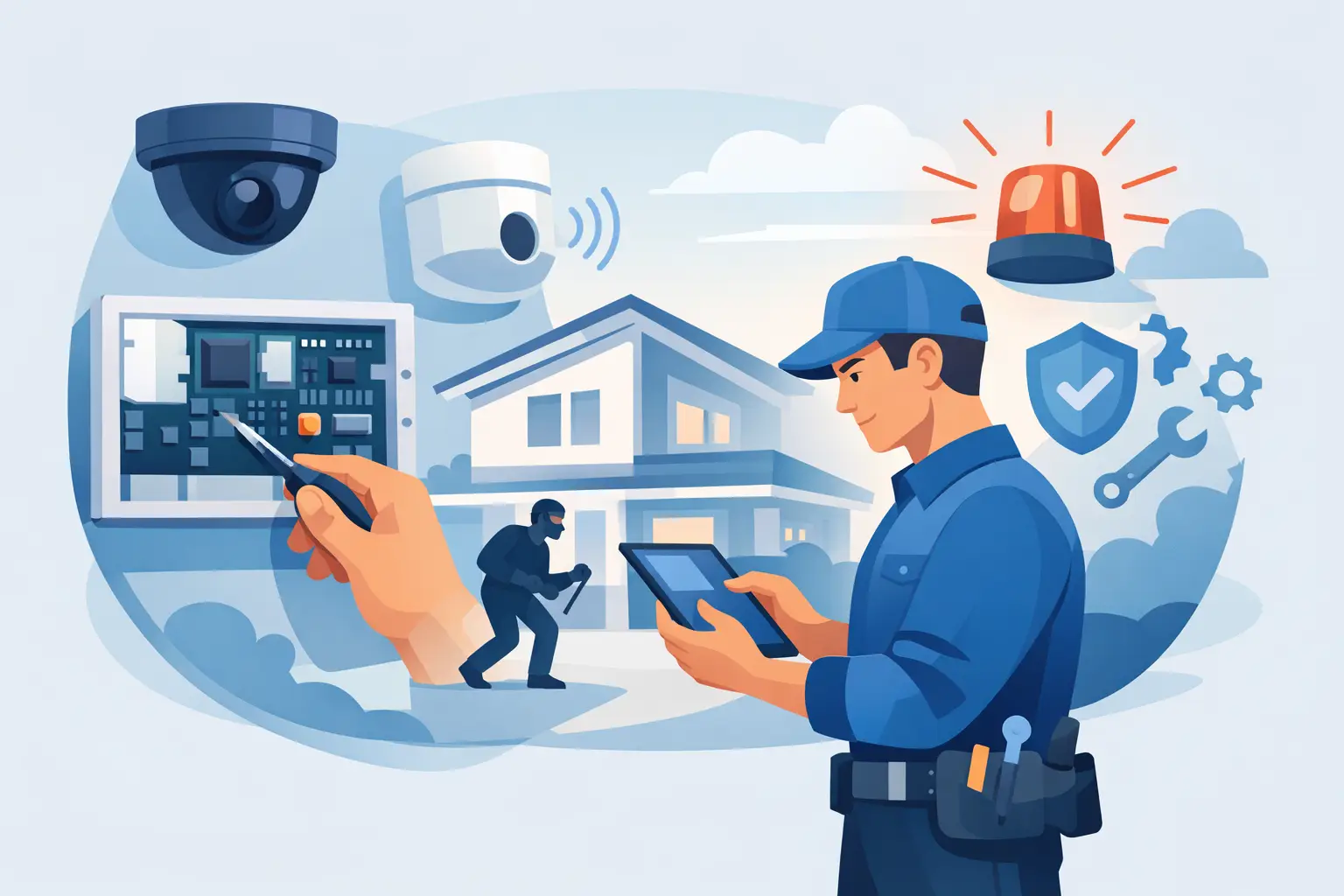
A burglar alarm is easy to forget about when it is sitting quietly on the wall doing its job. The problem is that most alarms only get attention when they start beeping, show a fault, or fail to respond properly. That is exactly why a burglar alarm maintenance service matters. If your system is there to protect your home, shop, office or rental property, it needs regular checks to make sure it still works as intended.
For many property owners, the risk is not obvious until something goes wrong. A battery weakens, a sensor drifts out of alignment, a keypad develops a fault, or a communication path stops reporting correctly. On the surface, the system may still look fine. In practice, it may no longer be giving you the level of protection you expect.
What a burglar alarm maintenance service actually covers
A proper burglar alarm maintenance service is more than a quick look at the panel. It is a structured check of the parts that keep the system dependable day to day. That usually means testing detectors, checking tamper circuits, reviewing control equipment, confirming sounders operate correctly, inspecting wiring where relevant, and making sure standby batteries are still holding a charge.
If the system is monitored or connected to smart features, maintenance should also include communication checks. There is little value in an alarm that sounds locally but fails to send the right notification when it matters. Likewise, if you rely on app control, remote setting, or alerts to your mobile phone, those functions need checking as part of ongoing support.
The exact scope depends on the type of system. A hardwired alarm in an older commercial unit has different service needs from a modern wireless alarm in a family home. Wireless devices need battery management and signal checks. Wired systems may need closer inspection of cabling, connections and legacy components. Good maintenance takes the actual system into account rather than applying the same routine to every property.
Why regular burglar alarm maintenance service is worth booking
The clearest reason is reliability. Alarm systems are not installed as decoration. They are there to deter intruders, warn occupants, and help limit loss or disruption. A system that has not been serviced for years can still power on, but that does not mean it will respond correctly under pressure.
Regular maintenance also helps reduce nuisance faults. Anyone who has dealt with random beeping in the middle of the night or repeated false alarms knows how frustrating they can be. In homes, that causes stress and inconvenience. In business premises, it can interrupt operations and create an impression that security is poorly managed. Servicing helps catch the causes early, before they become a bigger problem.
There is also the question of cost. Leaving an alarm unchecked often leads to avoidable repairs later on. A failing battery replaced during routine maintenance is straightforward. Left too long, the same issue can trigger wider faults, affect system performance, or lead to emergency call-outs. Preventative servicing is usually more practical and more economical than waiting for complete failure.
For landlords and business owners, maintenance can also support duty of care and internal risk management. Requirements vary depending on the premises and the type of system in place, so it is never one-size-fits-all. Still, being able to show that your security equipment is regularly serviced is a sensible part of running a property responsibly.
Common signs your alarm system needs attention
Sometimes the need for maintenance is obvious. The panel may display a fault, the external sounder may stop working, or a detector may fail during a user test. Other times the warning signs are easier to miss.
You might notice the system takes longer to set, gives inconsistent alerts, or occasionally fails to arm one zone properly. In older systems, keypads can become unreliable and batteries can degrade without much warning. Wireless devices may begin to drop signal if batteries are low or if the environment has changed. A recent extension, office refit, or layout change can also affect sensor coverage, which means the alarm still functions but no longer protects the space in the best way.
If your alarm has not been serviced in a long time, that alone is reason enough to have it checked. Even if nothing appears wrong, age and wear still affect performance.
Maintenance for homes, landlords and businesses
Homeowners usually want one thing above all else: confidence that the system will work when the property is empty or the family is asleep. In that setting, maintenance is about reliability, ease of use and making sure the alarm still suits the household. If the way you use your home has changed, the service visit can also highlight whether upgrades would make the system more practical.
For landlords, the picture is slightly different. A rental property may have more wear on entry points, changing occupancy, and a stronger need for straightforward operation. An alarm that is difficult to use or poorly maintained can quickly become a source of complaints or neglect. Regular servicing helps keep the system usable, safe and easier to manage over time.
Businesses often need a more considered approach. A shop, office or small commercial premises may rely on out-of-hours protection, staff access routines and integration with other security measures such as CCTV or access control. Maintenance here is not just about whether the siren sounds. It is about whether the system remains dependable as part of the wider security setup.
Repair, service or upgrade – knowing what is right
Not every system needs replacing. In many cases, a well-planned service visit can restore performance and extend the life of an existing installation. That is often the right route when the equipment is fundamentally sound and the faults are limited to batteries, detectors, user devices or minor configuration issues.
That said, there are times when an upgrade is the more sensible option. If parts are obsolete, faults keep recurring, or the system no longer matches the way the property is used, continued repair can become poor value. The same applies when customers want features the old setup cannot support, such as app control, smart notifications or better zoning.
The right advice should be practical rather than pushy. Sometimes maintenance is enough. Sometimes a partial upgrade makes more sense than a full replacement. And sometimes the honest answer is that an ageing system has reached the point where a new installation will be more reliable and easier to support.
Choosing a local provider for burglar alarm maintenance service
When you book maintenance, you are not only paying for a checklist. You are relying on someone to spot issues properly, explain them clearly, and carry out work to a professional standard. That is why local knowledge and hands-on experience matter.
A provider that regularly works across homes and commercial properties in Bolton and the wider North West is more likely to understand the mix of older alarm systems, newer smart setups, and practical site issues that come up in real properties. That includes everything from ageing wired systems in established buildings to wireless alarms in newer homes and small business units.
It also helps when the same company can support the whole life of the system, from initial survey and installation through to servicing, repairs and upgrades. That continuity makes fault finding easier and gives customers a clearer route for ongoing support. For many people, reassurance comes from knowing there is a local specialist they can call rather than a faceless national provider with limited flexibility.
At ESI, that long-term approach is central to the service. Maintenance is not treated as an afterthought. It is part of making sure each system continues to protect the property properly after installation.
What to expect from a professional visit
A good service appointment should be straightforward. The engineer should assess the condition of the system, test key components, identify any faults or signs of wear, and explain clearly what has been found. If remedial work is needed, the next steps should be sensible and transparent.
Just as importantly, the visit should not be overloaded with jargon. Most customers do not need a technical lecture. They need to know whether the system is working, what needs attention, and whether any changes would improve reliability or usability. Honest advice goes a long way here, especially when budgets and priorities differ from one property to another.
Some customers want to keep a trusted older system going for as long as practical. Others want to modernise and move towards app-connected security. Both are valid, and both benefit from proper maintenance rather than guesswork.
A burglar alarm should never be the part of your security that you only think about after a fault. Regular servicing keeps the system ready, reduces avoidable disruption, and gives you a clearer picture of whether your current setup is still doing its job. If there is any doubt about the condition of your alarm, having it checked now is far easier than finding out too late that something has been missed.