

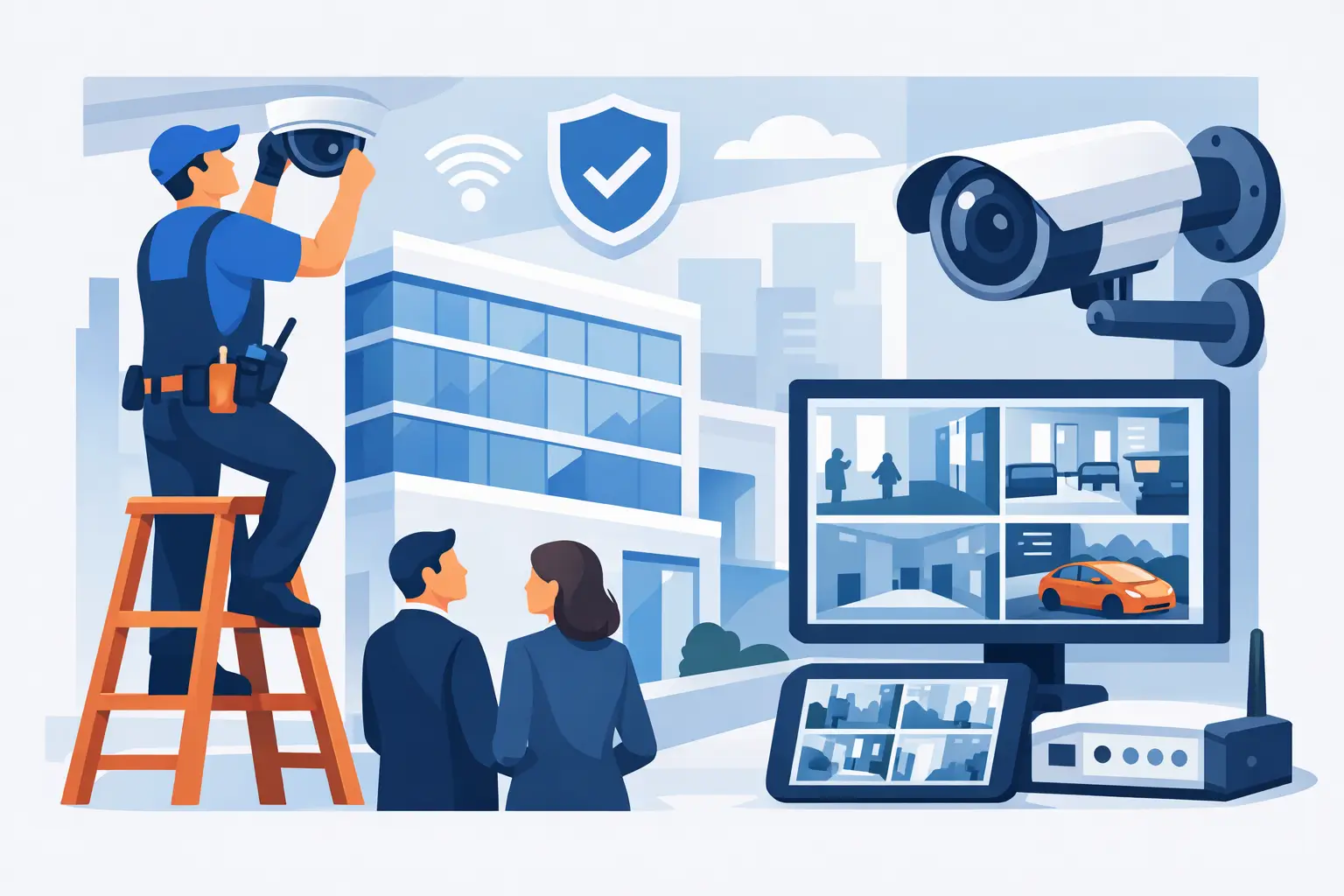
A camera mounted in the wrong place can give you a clear view of the ceiling and not much else. That is often the difference between a system that looks reassuring and one that actually helps when something goes wrong. Business CCTV installation is not just about fitting cameras to walls. It is about understanding how a site works, where risks sit, and how footage will be used day to day.
For small and medium-sized businesses, that matters more than ever. A shop owner may need better visibility around tills and entrances. A warehouse manager may be more concerned about loading bays, stock areas and out-of-hours access. An office may want to deter opportunist theft while also keeping entry points under review. The right setup depends on the building, the business and the practical problems you need the system to solve.
What good business CCTV installation should achieve
A properly designed CCTV system should do three things well. First, it should deter. Visible cameras, sensible placement and a clearly professional installation can make a premises less attractive to an intruder. Second, it should capture usable evidence. Grainy footage from the wrong angle is rarely much help after an incident. Third, it should support day-to-day management, whether that means checking deliveries, monitoring access, or reviewing an event quickly and clearly.
This is where a tailored survey makes a real difference. Two businesses on the same street can need very different coverage. A café with regular customer footfall has a different pattern of movement from a unit on an industrial estate. The installer needs to account for lighting conditions, blind spots, building layout, access routes and the times when the property is most vulnerable.
Why one-size-fits-all systems often fall short
Off-the-shelf kits can seem attractive at first glance, especially when budgets are tight. The problem is that commercial premises rarely fit neat assumptions. Ceilings vary, walls are not always ideal for cable routes, and some areas need close detail while others need wider coverage. You may also need the system to work alongside alarms, access control or existing security equipment.
A simple four-camera package might be enough for a very small site, but even then it depends on what you need each camera to see. Covering a rear fire exit is not the same as identifying faces at a front entrance. Watching a car park is not the same as monitoring transactions at a counter. The number of cameras matters less than whether each one has a clear purpose.
There is also the question of future use. Businesses often outgrow basic systems quite quickly. A premises may add a new office, convert storage space, extend trading hours or take on more staff. A professionally planned installation gives you room to adapt rather than forcing a full replacement later.
Planning a business CCTV installation around the site
The survey stage is where the important decisions are made. Before any equipment is chosen, the installer should look at how people move through the building, where incidents are most likely to happen and what level of image quality is actually needed in each area.
Entrances and exits are usually the priority because they create a clear record of who is coming and going. Reception areas, shop floors, till points, loading areas and side alleys are also common focus points. In some premises, internal corridors matter just as much as external coverage because they show movement between sensitive areas.
Lighting needs careful thought too. Strong sunlight through glazed frontages can affect image clarity during the day, while poorly lit yards can reduce what is visible at night. A good installer plans around this rather than leaving it to chance. Camera type, positioning and recording settings all need to match real conditions on site.
Business CCTV installation and the balance between coverage and detail
One of the most common mistakes in CCTV design is trying to make every camera do every job. A wide-angle camera can cover a large area, but it may not give enough detail for identification. A tighter view can provide better detail, but only over a smaller space. Good system design balances both.
For example, a front entrance may need a camera positioned specifically for identification, while a separate camera provides wider situational coverage of the approach. In a stockroom, you might care less about broad overview and more about seeing exactly who accessed shelving or a secure cage. In a car park, wide coverage may be useful, but entry and exit points often need sharper focus.
This is why a site visit is difficult to replace with guesswork. The best camera in the wrong position is still the wrong solution.
Storage, remote access and everyday use
Recording is not only about having footage. It is about being able to retrieve the right footage without fuss. Businesses should know how long recordings are kept, how easy it is to search by time and date, and who will have access to the system.
Remote viewing can be useful, particularly for owners and managers who are not always on site. It allows you to check a closing procedure, confirm a delivery has arrived, or review an alert without travelling in. That said, it needs to be set up properly. Access permissions should be sensible, and the system should be reliable enough that you are not constantly chasing connection issues.
Storage requirements also vary. A quiet office may not generate the same level of recording activity as a busy retail environment. The number of cameras, image quality and retention period all affect what capacity is needed. This is another area where practical advice matters. Over-specifying adds cost, but under-specifying can leave you without the footage you expected to have.
Why professional fitting matters
A neat installation is only part of the job, though it matters. Cabling should be secure and discreet where possible, equipment should be positioned properly, and the finished system should feel like part of the premises rather than an afterthought. More importantly, professional fitting helps avoid the issues that tend to appear later – unreliable connections, poor recording quality, awkward camera angles and avoidable blind spots.
Commercial properties also need work carried out with minimal disruption. Installers should be able to organise the job around trading hours, customer access and staff movement where practical. That is especially important in busy shops, offices and mixed-use buildings where downtime quickly becomes expensive.
A professionally fitted system also gives you someone to turn to if your needs change. If a camera needs repositioning, additional coverage is required, or an older recorder starts to fail, support should not end once the initial job is done. That long-term relationship is one reason many businesses prefer using a local specialist rather than buying equipment and piecing things together themselves.
Compliance and common-sense responsibilities
Business CCTV installation also carries responsibilities. If your cameras capture areas beyond your private premises, or record staff and visitors, you need to think carefully about how the system is used. Signage, data handling and legitimate purpose all need proper consideration.
That does not mean the process has to become complicated. It simply means CCTV should be installed and managed with care. A sensible installer can help you understand the practical side of this from the outset, so the system is not only effective but appropriate for the environment.
Choosing an installer for business CCTV installation
When comparing providers, the cheapest quote is rarely the full picture. It is worth asking how the system has been specified, whether the recommendation is based on an on-site survey, what aftercare is available and how future servicing or upgrades are handled. Those details tell you a lot about whether you are buying a properly considered service or just a box of hardware.
For businesses across Bolton and the wider North West, that local support can make a genuine difference. A company such as Enga Security Installations can assess the premises properly, recommend what suits the site rather than what happens to be on a shelf, and provide ongoing help if the system needs attention later.
The best result is rarely the most complicated one. It is a CCTV system that fits the way your business actually works, captures what matters, and gives you confidence when the building is busy and when it is empty. If you are thinking about cameras for your premises, start with the survey and the right questions. The equipment comes after that.