

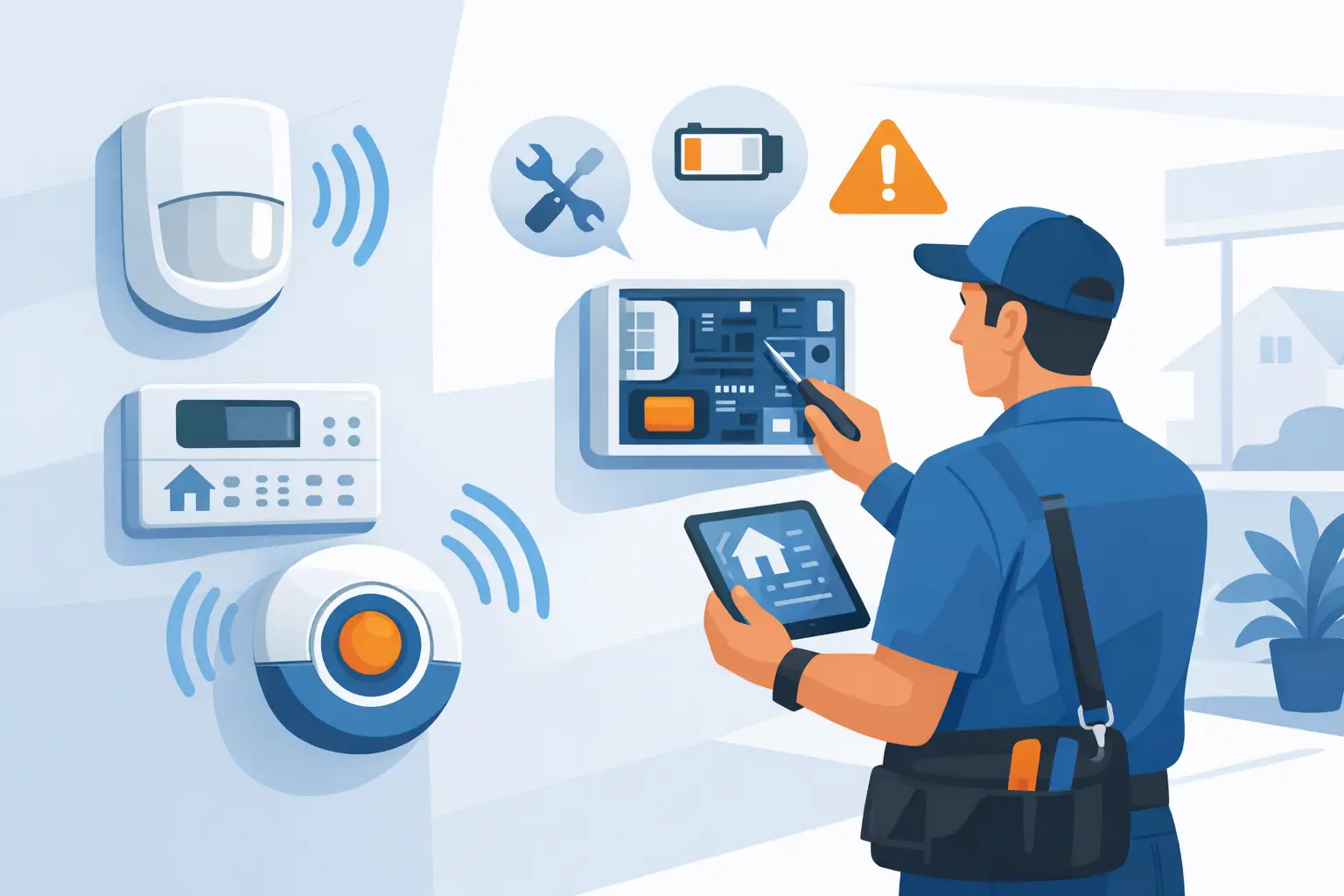
A wireless alarm can seem like the low-maintenance option. There are no cables to chase into walls, fewer disruptions during installation, and modern systems are designed to be user-friendly. Even so, if you are asking do wireless alarms need servicing, the short answer is yes. They still need periodic checks to make sure batteries, sensors, communication settings and overall performance are working as they should.
That matters more than many property owners realise. An alarm system is only useful if it responds properly when you need it, not just when you test the keypad on a quiet afternoon. A detector with a weak battery, a poorly positioned sensor or a fault in the signalling can leave gaps in your protection without obvious warning.
Why wireless alarms still need maintenance
Wireless alarm systems are often chosen because they are cleaner to install and easier to adapt than hardwired systems. For many homes, shops, offices and rental properties, they are an excellent option. But wireless does not mean maintenance-free.
A professionally installed system still relies on multiple components working together. Door contacts, PIRs, external sounders, control panels, keypads and app-connected modules all need to communicate properly. Over time, batteries run down, sensors can drift out of alignment, settings may need updating, and general wear can affect reliability.
In practical terms, servicing is about catching small issues before they become bigger ones. It is much better to replace a battery during a planned visit than find out there is a problem after a false alarm, a fault notification, or worse, a break-in with no proper activation.
Do wireless alarms need servicing as often as wired systems?
Not always in exactly the same way, but they still need regular attention. A wired alarm may have fewer battery-dependent field devices, while a wireless system places more importance on battery condition and signal integrity between devices. That changes what an engineer pays close attention to, but it does not remove the need for servicing.
For most domestic and small commercial systems, an annual service is a sensible baseline. In higher-use environments, larger premises or properties with insurance conditions, more frequent checks may be appropriate. It depends on the type of system, how heavily it is used, the age of the equipment and whether there have been any recurring faults.
A rental property that sits empty between tenants may need a different maintenance approach from a busy retail unit with daily setting and unsetting. Likewise, an older wireless system may need more attention than a newer one with better diagnostics.
What is checked during a wireless alarm service?
A proper service is more than pressing the test button and confirming the siren sounds. The aim is to assess the condition and dependability of the whole system.
An engineer will usually inspect the control equipment, test detectors and contacts, review event logs, check tamper protection, confirm that wireless devices are still communicating correctly and assess battery condition. If the system is linked to an app, smart hub or external signalling path, those features should also be checked.
Sensor placement can also be reviewed. Furniture moves, stock layouts change, doors are replaced and extensions get built. A detector that was well positioned two years ago may not now be giving the best coverage. Servicing is a chance to spot that.
For business premises, maintenance can also highlight whether the system still matches the way the site is used. If access patterns have changed or parts of the building are now occupied differently, the alarm setup may need adjusting.
Battery issues are one of the biggest reasons servicing matters
If there is one part of the question do wireless alarms need servicing that deserves a clear yes, it is battery management. Wireless alarms depend on batteries in individual devices, and although many systems give low-battery warnings, relying on warning tones alone is not the best strategy.
Some batteries decline gradually. Others seem fine and then drop off quickly. A detector with a weakening battery may become unreliable before the user fully notices a problem. In some cases, people silence a fault alert and put off dealing with it, which can leave part of the system compromised.
Routine servicing reduces that risk. Batteries can be tested, replaced where needed and recorded properly. That is especially helpful for landlords and business owners who do not want to keep track of multiple devices spread across a property.
Servicing also helps reduce false alarms and nuisance faults
False alarms are frustrating for homeowners and disruptive for businesses. They can annoy neighbours, interrupt trading and lead people to lose confidence in the system. In some cases, repeated faults encourage people to stop using the alarm consistently, which defeats the point of having it.
Wireless alarm servicing helps identify the causes behind these issues. It may be a battery problem, environmental interference, a sensor that needs adjusting, damage to a contact, or a user setting that no longer suits the property. None of those problems are unusual, but they are easier to deal with before they turn into a pattern.
This is one reason professional aftercare matters. It is not just about keeping the equipment running. It is about making sure the system remains practical to live or work with.
Can you service a wireless alarm yourself?
There are basic checks that owners can and should do. Testing the system in line with the manufacturer guidance, replacing user-changeable batteries where appropriate, and responding promptly to warnings are all sensible steps. Keeping detectors free from dust and making sure door and window contacts have not been knocked out of place can also help.
But that is not the same as a full service. Many faults are not obvious from a quick user test. Signal quality, device history, tamper performance and programming issues often need an engineer’s tools and experience. With monitored, app-connected or professionally fitted systems, improper changes can also create fresh problems.
For that reason, self-checks are useful between service visits, not a replacement for them.
Signs your wireless alarm may need attention sooner
You do not always need to wait for an annual appointment if the system is showing signs of trouble. Repeated fault messages, low-battery warnings, missing devices, unreliable app control, sensors not responding correctly or unexplained activations are all reasons to have the system checked.
It is also worth arranging a service after building work, decorating, replacing doors or windows, or changing how a property is occupied. Even fairly small changes can affect how well detectors and contacts perform.
If you have moved into a property with an existing wireless alarm, a service is a sensible first step. It confirms what system you have, whether it is working properly and whether it still suits the building.
Is servicing worth it for newer smart wireless alarms?
Yes, although the focus may be slightly different. Smart wireless alarms often have better diagnostics, mobile notifications and easier user control, which can make issues more visible. That is useful, but it does not remove the need for maintenance.
Smart systems still rely on sensors, batteries, firmware, communication paths and correct setup. A system can be modern and still suffer from battery faults, poor device placement or unreliable connectivity. Servicing helps make sure the convenience features are backed by dependable performance.
This is particularly relevant where a smart alarm is part of a wider setup that includes CCTV, door security or controlled entry. Each element may work on its own, but they should still be reviewed as part of an overall security approach.
The value of professional servicing from a local specialist
A proper service should not feel like a box-ticking exercise. It should give you confidence that the system protecting your home or business has been checked by someone who understands how it was designed, how it is used and what might need improving.
That is where a local security company can make a real difference. Instead of generic advice, you get practical recommendations based on the property itself. For some customers, that may simply mean keeping an existing wireless system in good order. For others, a service visit may reveal that a few detector upgrades or a better layout would improve reliability.
For homeowners, landlords and businesses across Bolton and the North West, that kind of honest aftercare is often more valuable than the original installation. Systems age, properties change and security needs move on. Ongoing support helps your alarm keep pace.
If your wireless alarm has not been professionally checked in some time, servicing is not an extra for the sake of it. It is one of the simplest ways to make sure the protection you are relying on is still there when it matters most.