

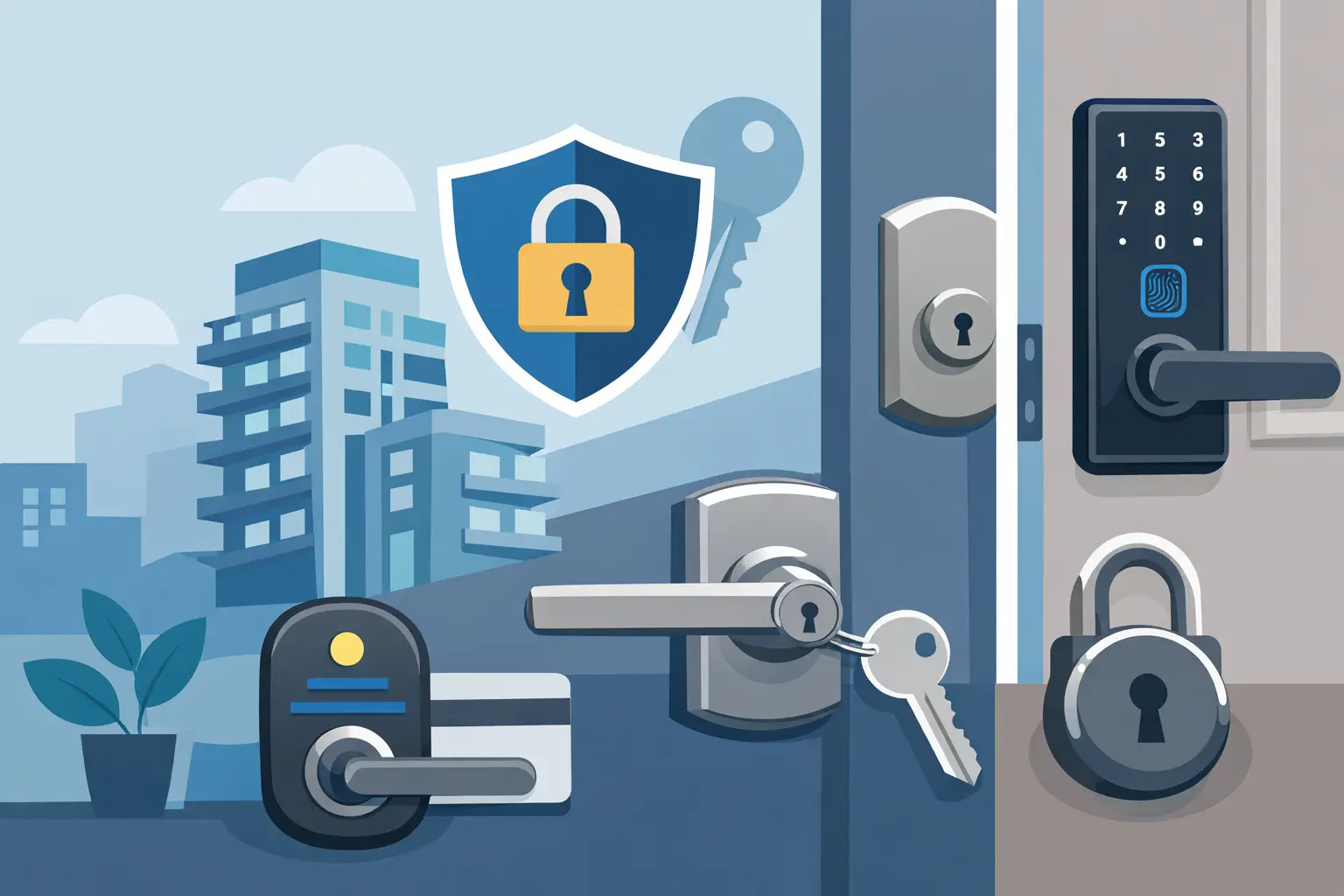
If you live in a flat, the front door does more work than most people realise. It is not just your main point of entry. It is also the barrier between your home and a shared hallway, stairwell or communal area where access can be harder to control. That is why choosing the best door locks for flats is rarely about picking one lock off a shelf and hoping for the best.
The right setup depends on the door itself, the building layout, fire safety requirements and whether you are an owner-occupier, landlord or managing agent. In many cases, the strongest option is not a single product but a properly matched locking system fitted to the door and frame it is meant to protect.
What makes the best door locks for flats different?
A flat door has different demands from a typical external house door. In a house, you are usually securing a front entrance that opens to the street or a private path. In a flat, your door may open into a communal corridor, and that changes both the risk and the practical requirements.
Security is still the first concern, but there are other factors in play. Fire door compliance matters. Escape in an emergency matters. Noise and repeated daily use matter. If the block has a shared entrance with controlled access, the lock on your own flat door needs to complement that setup rather than duplicate it.
This is where straightforward advice helps. A lock can be high quality on paper and still be the wrong choice for the door, the building, or the people using it.
Start with the door, not the lock
Before looking at brands or lock types, it helps to establish what kind of door you have. A solid timber flat entrance door will suit one type of lock arrangement. A uPVC or composite door with a full-height strip lock will suit another. Trying to force a solution that does not match the door usually leads to weaker security, inconvenience, or both.
Older flats often have timber doors with a basic night latch or mortice lock that has been there for years. Sometimes these are still serviceable. Often, they are overdue for an upgrade, especially if keys have changed hands between previous tenants, owners or contractors. Newer flats may already have multipoint locking systems, but even these can wear, go out of alignment or become difficult to operate if not maintained.
A proper survey is the sensible place to start because it shows what can be upgraded, what should be replaced and whether the frame, hinges and keep are doing their job.
Mortice sashlocks and deadlocks for timber flat doors
For many timber flat entrance doors, a British Standard mortice lock remains one of the most dependable options. Fitted correctly into a solid door, a 5-lever mortice sashlock or deadlock can provide strong resistance against forced entry.
A sashlock is useful where you want the convenience of a handle and latch combined with key locking. A deadlock is often chosen as a secondary lock or where a latch is not needed. Which is better depends on how the door is used day to day. For landlords, a sashlock can be more practical for tenant use, while a deadlock can add another layer where security is the priority.
The quality of the installation matters as much as the lock itself. A well-made lock fitted badly into a weak frame is not giving you the protection you think it is. On flat doors, especially in older buildings, frame condition and strike plate fixing should always be checked at the same time.
Night latches can still have a place
Night latches are common on flat doors, and there is a reason for that. They are convenient, easy to use from inside, and can lock automatically when the door closes. For residents who want quick day-to-day access without locking and unlocking a mortice lock every time, they can still be a practical choice.
That said, not all night latches offer the same level of protection. Basic models are more vulnerable to attack and may not be suitable as the main lock on a flat entrance door. Higher-security versions with deadlocking functions offer better resistance and are a better fit where a night latch is part of the main security setup.
In many flats, the best arrangement is a night latch used alongside a mortice lock rather than on its own. That gives convenience as well as a stronger backup when the property is unoccupied overnight or for longer periods.
Multipoint locks for uPVC and composite flat doors
If your flat has a uPVC or composite entrance door, there is a good chance it uses a multipoint locking system. These lock the door at several points along the frame when the handle is lifted and the key is turned.
This can be an excellent option because it spreads the locking pressure and helps keep the door secure along its full height. It is particularly useful where door alignment is good and the system is maintained properly. The problem comes when the mechanism becomes stiff, worn or misaligned. People often blame the cylinder when the real issue is the full strip mechanism or the fit of the door.
For flats with this type of door, the euro cylinder is often the part worth upgrading first. An anti-snap, anti-pick and anti-drill cylinder can make a real difference, particularly where the existing cylinder is basic or protrudes too far from the handle. This is one of the most cost-effective security upgrades for many modern flat doors.
Are smart locks suitable for flats?
Smart locks can work well in flats, but they are not right for every building. The attraction is obvious. Keyless entry, app control, user codes and temporary access for family, tradespeople or tenants can all make daily life easier.
For landlords and managed properties, smart access can also reduce problems with lost keys and unauthorised key cutting. For owner-occupiers, it can be useful for monitoring access and avoiding lockouts.
The trade-off is that smart locks need careful selection. Battery backup, manual override, compatibility with the existing door and compliance with building and fire door requirements all need checking. In communal buildings, you also need to consider whether the smart lock changes how the door is used from the inside during an emergency.
A smart lock is not automatically an upgrade just because it adds technology. It only makes sense when it improves access without compromising safety or reliability.
Landlords and leaseholders need to think beyond security alone
If you are renting out a flat or managing one on a leasehold basis, lock choice can affect more than break-in resistance. You may need to consider insurance terms, fire door regulations, managing agent rules and key control between tenancies.
This is where the best door locks for flats can vary from one property to the next. A landlord with frequent tenant turnover may prioritise restricted key systems or cylinders that can be changed quickly. A leaseholder in a purpose-built block may need to ensure that any lock replacement does not affect the flat entrance fire door certification or door closer operation.
It is also worth thinking about who needs access and how often. If multiple occupants need keys, a system that is secure but awkward in daily use may end up being misused. Security works best when the lock is practical enough to be used properly every day.
When a lock upgrade is overdue
There are a few common signs that a flat door lock should be looked at sooner rather than later. Stiff operation is one. So is needing to push or pull the door hard to get the key to turn. Loose handles, movement in the cylinder, visible wear on the frame keep, or a history of lost keys are all reasons to have the setup checked.
Another issue is age. If the lock has been in place for many years and no one knows exactly what standard it meets, it may not offer the level of protection now expected. Security standards have moved on, and older hardware may be the weak point on an otherwise decent entrance door.
For customers across Bolton and the North West, this is often where practical on-site advice helps most. Enga Security Installations regularly sees doors where the lock itself is only part of the problem, and a proper fix means looking at the full door set rather than swapping one component.
Professional fitting matters more than most people think
A good lock fitted poorly can leave gaps, weak fixing points or poor alignment that make forced entry easier. On flat doors, where the frame may have seen years of wear and the door may be part of a fire-rated assembly, getting the details right matters.
Professional fitting also helps avoid the common mistake of over-specifying one part while ignoring another. There is little value in fitting a top-grade cylinder to a loose handle set or a weakened frame. The strongest results come from treating the door, lock, frame and hardware as one security system.
If you are deciding what to fit, the sensible approach is to look at how the door is built, who uses it, what level of access control you need and whether there are building-specific rules to follow. That usually leads to a better outcome than chasing the latest product name.
The best flat door lock is the one that suits the door, works reliably every day and has been fitted with care. If you are not sure what your current setup is really doing for you, that uncertainty is often the clearest sign it is time to get it checked.