

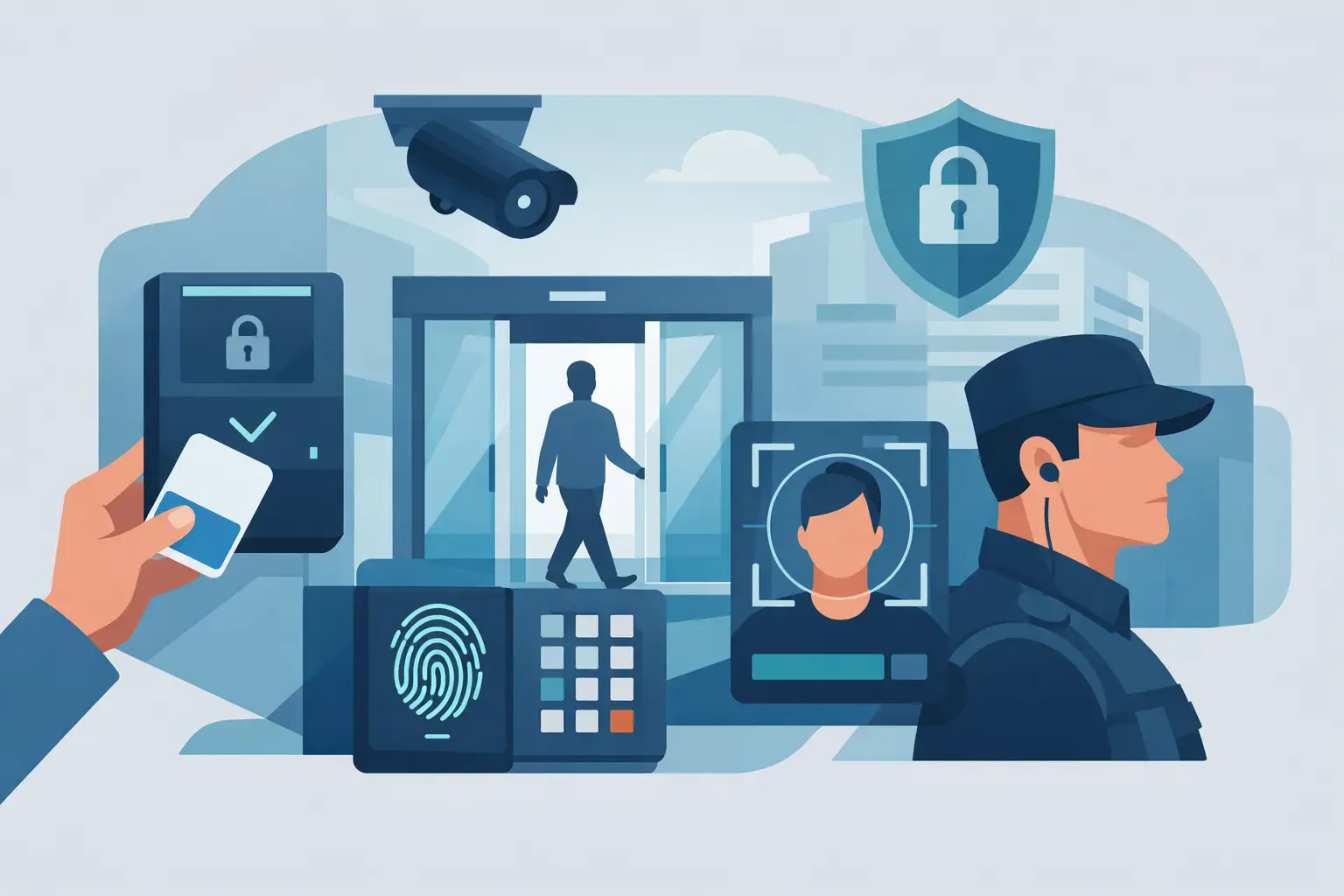
A lost key can be copied. A staff code can be shared. A door left on the latch can undo every other part of your security. That is why access control systems have become a practical upgrade for homeowners, landlords and businesses that want more certainty over who can enter, when they can enter, and how that access is managed.
For some properties, that means replacing a traditional lock and key routine with fobs, keypads or app-based entry. For others, it means adding control to a busy office door, a shared entrance, a storeroom or a block-managed property. The right setup depends on the building, the people using it, and the level of control you actually need rather than the most complicated system on the market.
What access control systems actually do
At a basic level, access control systems decide who can open a door and who cannot. Instead of relying only on a physical key, the system checks a credential such as a code, card, fob, phone app or biometric identifier before releasing the lock.
That sounds straightforward, but the real value is in day-to-day control. If a member of staff leaves, access can be removed without changing every lock. If a tenant should only enter through one communal door, permissions can be limited. If you want a record of entry at certain times, some systems can provide that too.
This is where professionally specified systems usually outperform off-the-shelf options. A single front door with light daily use needs a very different solution from a rear trade entrance, a shared office, or a multi-user commercial building. The lock type, power supply, fire safety requirements and traffic levels all matter.
Where they make the biggest difference
For businesses, access control often starts with control and accountability. You may want staff to enter the main office during working hours but restrict stockrooms, plant areas or private offices. If contractors need temporary access, that can usually be issued for a set period instead of handing over a key that may never come back.
For landlords and property managers, the priority is often practical management. Shared entrances, service rooms and outbuildings can be easier to oversee when access is assigned properly and changed without replacing hardware across the site.
For homeowners, the benefit is usually convenience with added security. Side gates, detached garages, home offices and main entrances can all be brought under better control, especially where multiple family members need access or where physical keys have become a nuisance.
The point is not to make a property feel complicated. It is to remove weak points and make access more manageable.
Choosing the right type of access control system
There is no single best option for every property. A keypad entry system may suit one site perfectly and be the wrong choice for another.
Keypad systems
These are a common starting point. They are relatively simple to use and work well where a smaller number of trusted users need regular access. They can be cost-effective, but codes can be shared, guessed or written down, so they are not always ideal for busier sites or higher-risk doors.
Fob and card systems
These are popular in commercial settings because they are easy to manage and familiar for staff. If a fob is lost, it can usually be removed from the system without changing the whole lock arrangement. For many offices, schools, salons, warehouses and shared buildings, this strikes a sensible balance between usability and control.
App-based and smart entry
Phone-based access can be very convenient, especially where remote management matters. It may allow permissions to be changed quickly and can suit modern homes or small businesses that want flexibility. The trade-off is that it depends more heavily on connectivity, device compatibility and the way people actually use their phones day to day.
Audio and video entry
Where visitor management is part of the problem, audio or video entry can be the better fit. This is common on shared residential entrances, offices and gates where someone needs to verify a visitor before granting access. It adds another layer of reassurance, particularly where the door is not always staffed.
Biometric systems
Fingerprint or facial recognition systems can offer a high level of control, but they are not necessary for every site. They can be useful in higher-security environments, though they usually involve greater cost and more careful consideration around privacy, user acceptance and maintenance.
Why installation matters as much as the equipment
An access control system is only as good as the way it is fitted and configured. That includes the door itself, the frame, the locking hardware, the cabling or wireless communication, the exit method and the power arrangement.
A common mistake is focusing on the reader or keypad while overlooking the door condition. If the door is weak, misaligned or easy to force, the electronic side of the system can only do so much. Good installation looks at the whole entry point, not just the device mounted beside it.
This is also where a proper site survey matters. Usage patterns, building layout, fire door considerations and the number of users all affect the final specification. A small shop in Bolton will not have the same requirements as a block entrance or a family home with side access and deliveries to consider.
The trade-offs worth thinking about
More control usually brings more decisions. That is not a reason to avoid access control, but it is worth being realistic.
If you choose a very simple system, it may be easier to use but offer less accountability. If you choose a more advanced setup with schedules, permissions and remote management, it can provide stronger control but may need more administration.
Budget matters too. A single controlled door is a different investment from a networked multi-door system. In some cases, a staged approach is the sensible option – securing the most important entry points first and expanding later.
There is also the question of user behaviour. The best system still depends on people using it properly. Propped-open doors, shared credentials and poor handover can undermine the benefits quickly. That is why straightforward design usually works better than overcomplicating things.
Maintenance and aftercare are part of the job
Access control is not a fit-and-forget service. Doors move over time, usage changes, credentials get lost, and software or hardware may need attention. Regular servicing helps keep the system reliable and can pick up problems before they turn into lockouts or security gaps.
For businesses, this matters because downtime affects staff and customers. For landlords, it matters because communal door failures create frustration and complaints very quickly. For homeowners, it matters because a front or side entrance needs to work first time, every time.
That long-term support is one reason many customers prefer a local installer rather than trying to piece together products and trades separately. A company such as Enga Security Installations can survey the property, recommend a suitable setup, install it properly and remain available for servicing, repairs and upgrades as needs change.
When is access control worth it?
Usually, it becomes worth it as soon as keys are becoming difficult to manage, access needs to be restricted, or there is uncertainty over who can enter and when. That could be a business with staff turnover, a landlord managing shared entrances, or a homeowner who wants a more dependable way to secure part of the property.
It is also worth considering when you are already upgrading other parts of your security. Access control often works best as part of a wider plan that may include better locks, CCTV, alarms or improved door security. The systems do not have to be extravagant to make a real difference. They just need to suit the building and the way it is used.
The best result is usually the one that feels straightforward once it is in place. People can enter where they should, unauthorised access becomes harder, and the property is easier to manage day to day. If you are considering access control systems, start with the practical question: what problem do you need the door to solve? The right answer usually starts there.