

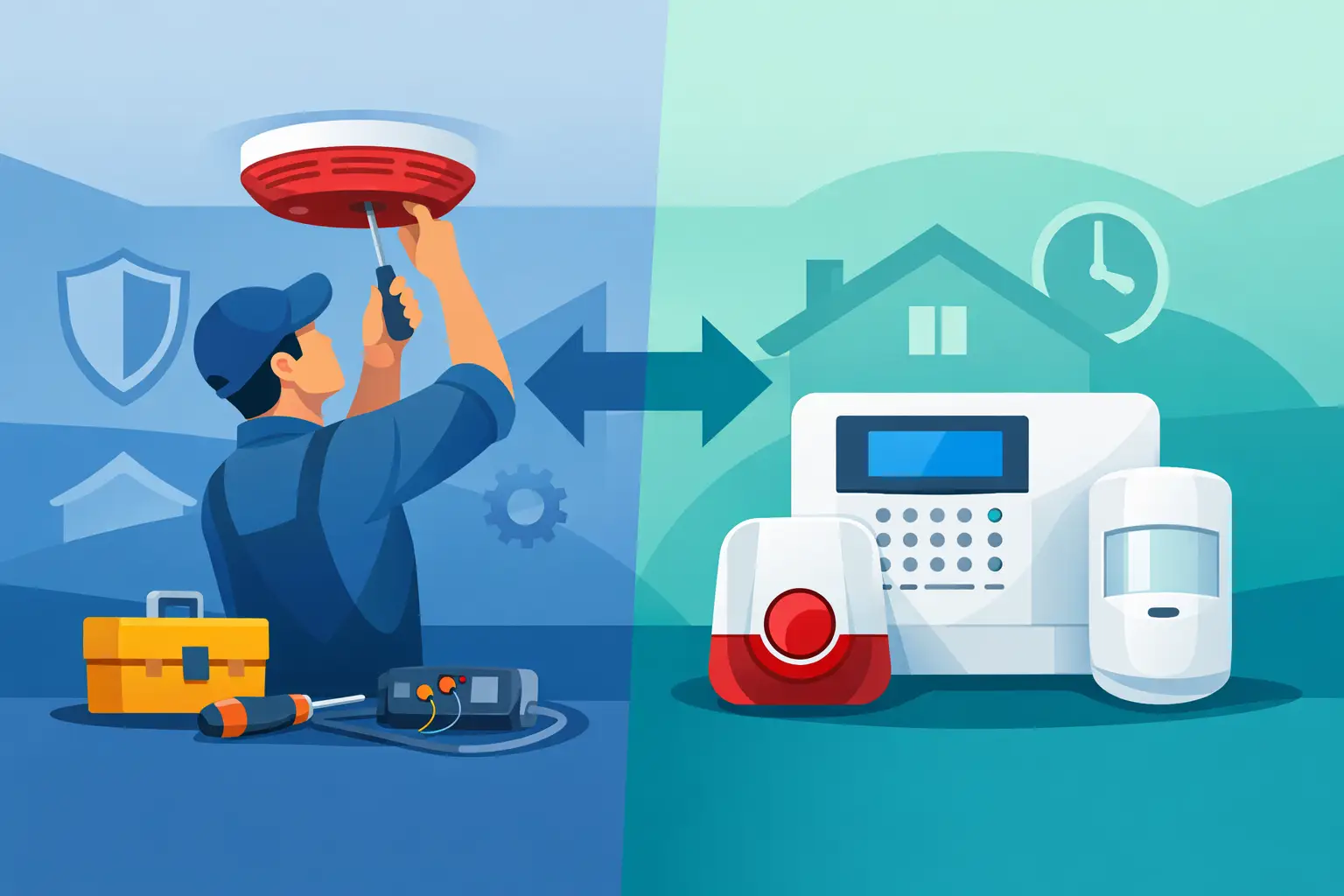
A control panel that will not stop beeping, an alarm that triggers without reason, or a system that no longer communicates with its keypad can quickly become more than an annoyance. The decision between alarm repair or replacement is about restoring dependable protection without spending money where it is not needed.
For many homes and business premises, a targeted repair is the sensible answer. In other cases, an ageing system has reached the point where continued call-outs, unavailable parts and limited capability make replacement better value. The right choice depends on the fault, the condition of the wider system and what you now need your security to do.
Start with the reason the alarm has failed
An alarm fault does not automatically mean the whole system is beyond repair. Batteries, power supplies, sensors, connections and keypads all have a working life, and one failed component can affect how the system behaves.
A flashing warning light or intermittent chirping often points to a low backup battery. A detector may need adjustment, cleaning or replacement if it is causing false activations. If a wired alarm has been disturbed during decorating, building work or a change to the layout of a property, a loose cable or damaged connection may be the cause.
Wireless systems have their own common issues. Individual device batteries can run low, a sensor may lose communication, or changes inside the property can reduce signal strength. These faults can often be resolved without removing the complete alarm installation.
A professional inspection matters because symptoms can be misleading. Replacing a battery might quieten a panel temporarily, but it will not address a failing power supply, degraded wiring or a control unit that is no longer operating reliably.
When alarm repair is the practical choice
Repair is often worthwhile when the alarm system is relatively modern, has been maintained properly and continues to meet the needs of the property. A quality system does not need replacing simply because one component has failed.
It is usually sensible to repair an alarm when the fault is isolated, replacement parts are available and the system can still be tested fully after the work is complete. This may include fitting a new external sounder, replacing a faulty PIR detector, renewing standby batteries or repairing damaged cabling.
For a landlord, a prompt repair can be particularly important where a property is between tenancies or an alarm is causing nuisance to neighbours. For a business, resolving a detector, keypad or communications fault quickly can avoid disruption and restore confidence that the premises are protected outside trading hours.
The benefit of repair is straightforward: it can extend the useful life of a good system at a lower immediate cost. The trade-off is that repair should not become a pattern of repeated spending on an alarm that is increasingly unreliable or no longer suited to the building.
Signs replacement may be the better investment
Older alarm systems can continue to work for years, but age eventually affects reliability and support. If parts are obsolete, the control panel has recurring faults or the system cannot be serviced with confidence, replacement becomes the more responsible recommendation.
Consider replacement if your alarm has several faults at once, regularly produces false alarms, cannot be reset consistently, or has been repaired repeatedly over a short period. The same applies where the existing installer cannot obtain compatible components or cannot verify that the system will remain dependable after a repair.
Capability is another reason to upgrade. Many older systems were designed only to sound an internal and external alarm. A modern system can provide app alerts, set and unset options from a smartphone, better device supervision and, where appropriate, integration with cameras or access control. That does not mean every property needs every feature, but a system should reflect how the premises are used now.
A house extension, loft conversion, new home office or converted garage may have created areas that the original alarm does not cover properly. Businesses often face similar changes after rearranging stockrooms, offices, entrances or staff access. Adding devices to an old panel is sometimes possible, but it may be better to design a replacement system around the updated layout.
Repair or replacement: look beyond the upfront price
The cheapest immediate option is not always the best value. A repair quotation should be weighed against the age of the control equipment, the availability of future parts and the likely remaining life of the system.
For example, replacing a single detector on a well-supported system may be a sensible repair. Replacing a control panel, multiple detectors and a communicator on an old installation can bring the cost close to a new system, while still leaving you with older cabling or limited functionality.
A replacement also gives an opportunity to correct issues that may have existed since the original installation. These can include poorly positioned detectors, incomplete coverage, difficult-to-use keypads or an external bell box that is no longer providing a clear deterrent. A survey should establish what is already in place, what can safely be retained and what the property genuinely requires.
For commercial customers, consider the cost of inconvenience as well as the equipment. False alarms, unreliable setting procedures and frequent engineer visits take up staff time. For homeowners, the real cost is often the worry of leaving a property protected by a system they no longer trust.
Wired, wireless and smart alarm options
If replacement is recommended, the choice is not simply between one brand and another. The best type of alarm depends on the building, the level of disruption acceptable during installation and the security requirements of the people using it.
Wired alarm systems
Hardwired systems remain a strong option for properties undergoing refurbishment, extensions or major renovation. Cables can be concealed during the work, and wired devices do not rely on individual sensor batteries. They can be an excellent long-term choice where the building layout makes cable routes practical.
Wireless alarm systems
Wireless alarms are often well suited to occupied homes, shops and offices because they can be installed with less disruption. Devices can be positioned where they are needed without lifting floors or opening finished walls. They still require professional placement, signal testing and periodic battery checks to work as intended.
App-connected systems
Smart alarm systems can give users convenient control and notifications, but convenience should not replace sound security design. The system still needs the right number of detectors, sensible zoning and reliable communications. App access is useful when it supports good daily habits, such as checking that the alarm has been set when leaving a business or receiving an alert while away from home.
Why a survey should come before the decision
No two properties have the same entry points, routines or risks. A ground-floor flat, a detached family home, a convenience shop and a small office each need a different approach. A proper survey considers doors, accessible windows, outbuildings, internal layout, pets, staff access and how the system will be used day to day.
It also prevents unnecessary replacement. An engineer can assess whether the existing system can be repaired safely and whether any components remain suitable. If a replacement is the better route, the recommendation should explain why, rather than relying on a one-size-fits-all package.
Enga Security Installations provides this practical, local approach across Bolton and the North West, from fault finding and servicing to tailored alarm upgrades. The aim is a system that is straightforward to operate and dependable when the property is empty.
Do not ignore a recurring alarm fault
It can be tempting to disconnect a noisy sounder, silence a warning tone or leave a problematic alarm unset until there is time to deal with it. That can leave a home or business without the protection it relies on, and it may allow a minor fault to develop into a larger one.
If the alarm is activating repeatedly, avoid making repeated resets without identifying the cause. Make a note of the display message, the time of activation and any recent changes to the property, such as building work, a power cut or new equipment nearby. This information can help an engineer diagnose the issue more efficiently.
The most reassuring outcome is not necessarily a repair or a replacement. It is knowing that the decision has been based on the actual condition of your system, the way your property is used and a clear plan for keeping its protection dependable.