

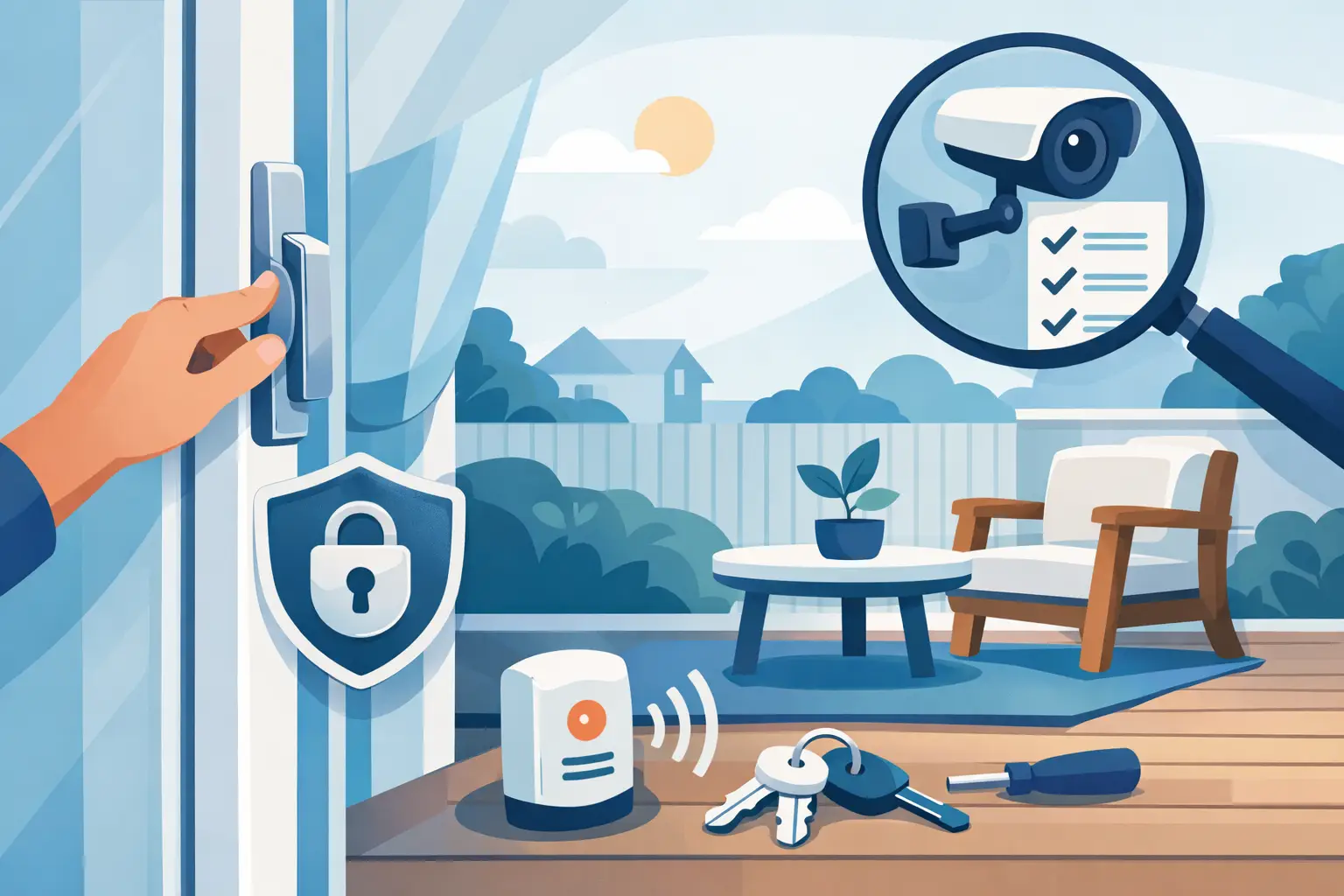
A patio door should feel like a practical way into the garden, not the weakest point in the building. If you are wondering how to secure patio doors, the answer usually starts with one simple point: most problems come from poor locking, worn fittings, or glass that has never been assessed as part of the wider security setup.
Patio doors are attractive to intruders for obvious reasons. They are often set at the rear of a property, out of sight from the road, and many older systems were fitted with fairly basic locks. On homes, that can mean easier access to kitchens, conservatories, or open-plan living areas. On commercial premises, rear sliding or French doors can present a quiet point of entry if they are not tied into alarms, CCTV, and proper physical protection.
How to secure patio doors without guesswork
The right approach depends on the type of door you have. Sliding patio doors, French doors, bifold doors, and older uPVC systems all have different weak points. That is why a quick fix bought off the shelf is not always enough. A door can look solid and still be vulnerable because the cylinder is exposed, the rollers are loose, or the frame no longer keeps the sash tight under lock.
A proper check starts with the basics. Look at how the door locks, whether it drops cleanly into place, and whether there is any movement when it is shut. If the handle feels loose, the lock sticks, or the leaf can be lifted or pushed within the frame, those are all signs that the door needs attention. Security upgrades work best when the door itself is in good working order.
For many properties, the first improvement is the lock. Standard patio door locks are often adequate when new, but they can become less effective over time, especially on high-use doors. Multipoint locking systems usually offer better resistance than a single locking point because they secure the door at several places along the frame. On French doors, the meeting point between the two leaves needs particular attention, as this is often where force is applied.
Cylinder quality also matters. If the lock barrel is vulnerable to snapping, bumping, or drilling, the rest of the door can be undermined very quickly. Upgrading to a higher-security cylinder can make a noticeable difference, but it needs to be compatible with the existing mechanism and fitted correctly. A good lock on a poorly aligned door will never perform as it should.
The most common weak points on patio doors
Glass gets most of the attention, but in practice the lock side and the track are often bigger concerns. Sliding patio doors can sometimes be lifted from their runners if there is not enough anti-lift protection. Even when they cannot be fully removed, excess play in the track can make forced entry easier.
Anti-lift devices are one of the most useful upgrades for older sliding doors. These stop the panel being raised enough to come clear of the frame. They are simple in principle, but the fitting needs to be precise. If they are badly positioned, they can affect operation without adding much real protection.
The track itself should also be checked. Dirt, wear, and poor adjustment can stop the door from closing tightly. Some people add a simple security bar or track blocker at the bottom, which can be effective as an extra physical barrier, particularly overnight. That said, it should support the main locking system rather than replace it.
On French doors, the inactive leaf is often overlooked. If the top and bottom shoot bolts are weak or not engaging properly, the whole set can become vulnerable. Handles, hinges, keeps, and fixings all need to work together. One failed component can compromise the door far more than people realise.
Does the glass need upgrading?
Sometimes yes, but not always. Toughened or laminated glazing can improve resistance, and security film may help in some situations, but glazing upgrades are only worthwhile if they suit the door and the risk level. For a rear domestic patio door, laminated glass can slow down attack and make access noisier and more difficult. For some commercial settings, it may be part of a wider security specification.
The trade-off is cost. Replacing glazed units is a bigger job than changing locks or fitting anti-lift protection, so it is usually best reserved for doors that already need new glass, properties with higher exposure, or sites where there are valuable contents on display. If the frame and locking system are poor, spending heavily on glass alone is rarely the best first step.
Visibility also plays a part. Rear doors hidden by tall fencing, overgrown gardens, or side access gates create more opportunity for an intruder to work unseen. In those cases, improving natural surveillance, external lighting, and camera coverage may do as much for security as strengthening the door itself.
Smart and electronic security around patio doors
Physical security should always come first, but electronic protection adds another layer. A well-secured patio door is far better when it is backed up by an alarm and visible CCTV. Door contacts can detect opening, shock sensors can identify forced attack, and external cameras can deter opportunists before they get as far as testing the lock.
For households, this can be especially useful if the patio door sits at the rear where activity is less noticeable. Smart alarm systems can send alerts to your mobile phone and allow you to check status remotely, which is helpful if you are away or managing a rental property. For small businesses, monitored access points and recorded footage provide reassurance and evidence if there is an incident.
What matters is integration. A camera pointed vaguely at the garden is not the same as a system designed to cover the likely approach, the doorway, and any side access route. The same goes for alarms. Sensors need to be selected and positioned properly to avoid blind spots and false activations.
Simple habits that make a difference
Even the best hardware is let down if the door is left on the latch or not fully engaged. Patio doors should be locked fully whenever the property is unattended and, ideally, overnight as well. Vent position settings can be useful, but they are not a substitute for proper security when no one is around.
Keys should never be left in the lock or on a nearby table where they can be reached through broken glass. Blinds and curtains can also help at night, especially if expensive items are visible from outside. For business premises, routine end-of-day checks are worth formalising so rear doors are not missed during closing.
Maintenance is another point people put off for too long. If a patio door has become stiff, dropped slightly, or started scraping, get it looked at before the problem affects security. Locks and mechanisms tend to fail gradually rather than all at once, which means there is usually a window to repair or upgrade before the door becomes a serious weakness.
When professional help is the better option
If the door is older, poorly aligned, or part of a wider security concern, a professional survey is usually the most sensible route. It helps you avoid spending money in the wrong place. Some properties need a lock upgrade. Others need adjustment, new keeps, anti-lift protection, better cylinders, alarm coverage, or a combination of all five.
That is particularly true for landlords and business owners, where security needs to be dependable rather than improvised. A rear entrance used daily by tenants, staff, or customers puts more strain on locks and hardware, and the right specification is not always obvious from appearance alone. A local installer with hands-on experience can assess the actual condition of the door, how it is used, and what level of protection makes sense.
At ESI, that practical approach is how we look at patio door security across homes and commercial properties in Bolton and the wider North West. The aim is not to overcomplicate it. It is to identify the weak point, recommend what genuinely improves protection, and make sure the finished system works properly day to day.
If your patio doors are the part of the property you are least sure about, that is usually reason enough to have them checked. Good security is rarely about one dramatic upgrade. More often, it comes from sorting the small weaknesses that make a door easier to force than it ought to be.