

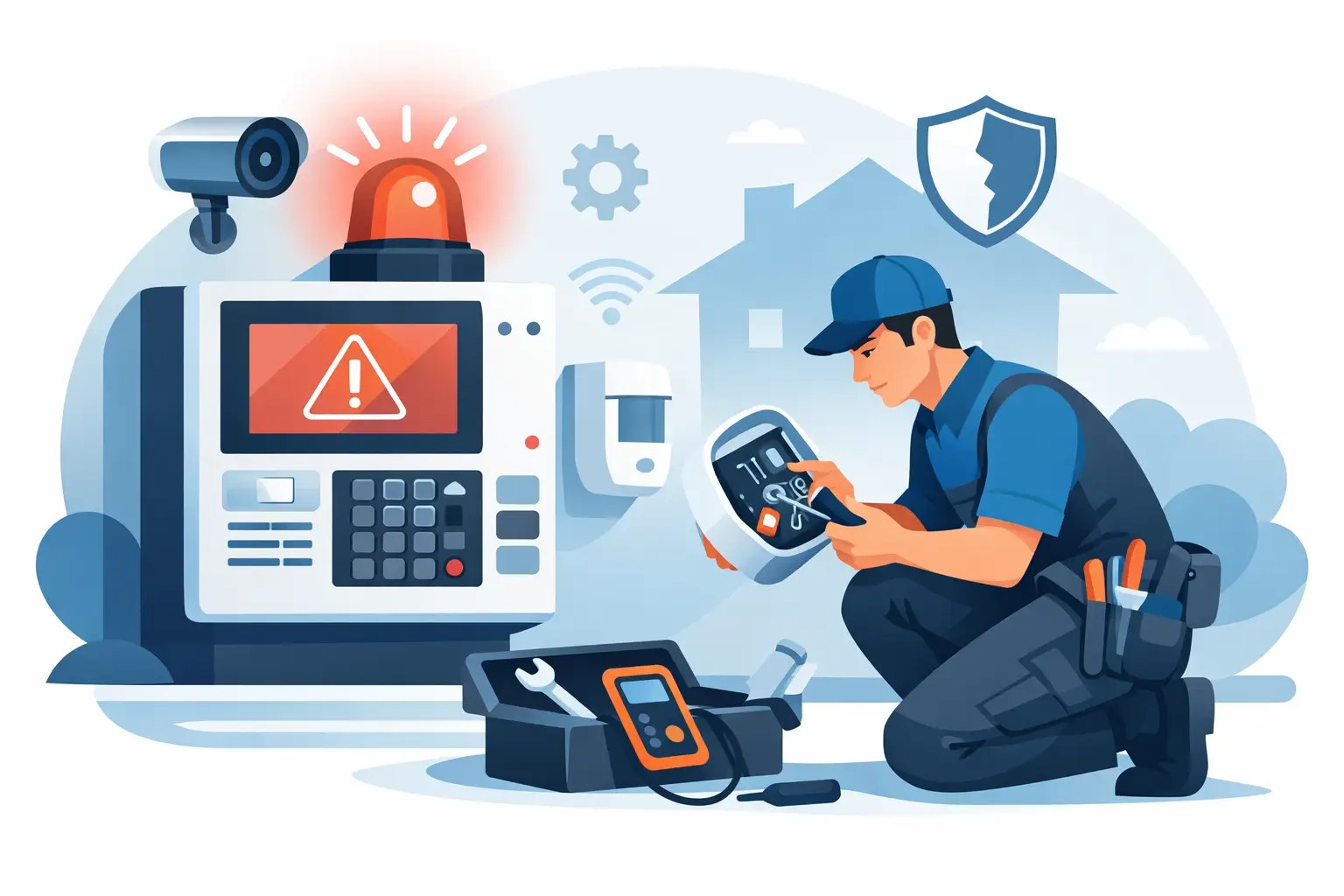
A beeping keypad at 2am usually gets attention faster than any security advice ever could. For many homeowners and business owners, the moment they start looking for an alarm system repair service is when the system begins doing the opposite of what it should – causing worry instead of reassurance.
A faulty alarm is not always a full system failure. Sometimes it is a worn battery, a damaged sensor, a communication fault or a control panel issue that has built up over time. The difficulty is knowing whether the problem is minor, whether the system is still protecting the property properly, and whether repairing it makes more sense than replacing it.
What an alarm fault usually means
Alarm systems tend to fail in predictable ways. A keypad may show a tamper warning, the external siren may trigger without cause, a detector may stop responding, or the panel may display a low battery or line fault. In commercial settings, users may also notice issues with setting and unsetting, part-set zones not working correctly, or repeated false activations outside opening hours.
None of these faults should be ignored. A system that appears to be partly working can leave blind spots in the property’s protection. That matters whether you are securing a family home, a rental property, an office or a shop. An alarm is only useful when every key part of it is communicating as intended.
It is also worth remembering that some problems are not with the alarm itself but with the surrounding components. Damaged door contacts, ageing PIRs, power supply faults, cabling issues and even loose covers can create recurring trouble signals. That is why a proper repair visit should focus on diagnosis first, not guesswork.
Signs you need an alarm system repair service
Some warning signs are obvious. If the alarm will not set, keeps going off for no clear reason, shows a persistent fault message or has stopped alerting properly, it needs attention. Other signs are easier to overlook because the system still seems usable.
For example, if you have started bypassing a zone regularly just to arm the system, that is a repair issue. If the app connection drops out on a smart alarm, if users have to try several times to unset, or if there are unexplained chirps and warning tones, the system is telling you something is wrong. Waiting often turns a small repair into a more expensive one.
For landlords and businesses, the risk is not just inconvenience. A faulty alarm can create callouts, complaints from neighbours, confusion for staff, and gaps in compliance or insurance expectations. Even where cover is not invalidated, a poorly maintained system is far less dependable when it is actually needed.
Common causes of alarm problems
Battery failure is one of the most common issues, especially in systems that have been running for years without servicing. Backup batteries in control panels and wireless device batteries both have a lifespan. As they weaken, faults start to appear long before complete failure.
Wear and tear is another common cause. Sensors can drift out of alignment, external sounders can deteriorate in the weather, and older keypads may simply become unreliable. In hardwired systems, cabling can suffer accidental damage during building work or gradual degradation over time.
Power cuts and surges can also expose weaknesses. Sometimes the alarm comes back online normally. Sometimes a panel develops a fault after a mains interruption, or settings are affected in a way that needs engineer attention.
Older systems present a slightly different issue. The fault may be repairable, but replacement parts can be limited or no longer supported. In that case, the sensible option depends on the age of the system, the availability of components and how well the setup still matches the property.
Repair or replace? It depends on the system
Not every fault means the whole alarm needs replacing. In many cases, a targeted repair restores the system quickly and cost-effectively. That might involve replacing a battery, swapping a faulty detector, repairing a connection or reprogramming the panel after a communication issue.
Where replacement becomes worth considering is when faults are recurring, parts are obsolete, or the system no longer suits the building. An older alarm might still be repairable, but if it lacks the features you now need – such as smartphone control, better zoning, improved reliability or easier user management – putting money into repeated repairs can become poor value.
This is where honest advice matters. A dependable installer should not push a new system where a straightforward repair will do. Equally, they should not keep patching an alarm that is no longer a sensible long-term option. The right recommendation depends on condition, age, usage and budget.
Why false alarms should be taken seriously
False alarms are often dismissed as an annoyance, but they are usually a sign that the system needs attention. Repeated activations can point to detector faults, poor positioning, battery issues, environmental factors or problems with the control equipment.
At home, that means disrupted sleep, stress and loss of confidence in the system. In a business setting, it can interrupt operations and create uncertainty for keyholders. Over time, people start assuming every activation is a false alarm, which defeats the point of having security in the first place.
A proper repair visit should look beyond stopping the noise. It should identify why the alarm is misbehaving and whether any part of the system needs adjustment, replacement or upgrading.
What to expect from a professional alarm system repair service
A professional service should begin with assessment. That means checking the panel, power supply, batteries, detectors, sounders, communications and user functions rather than replacing parts at random. Good diagnosis saves time and helps avoid repeat faults.
From there, the engineer should explain the issue in plain terms. If there are options, those should be set out clearly. Some customers want the quickest way to restore operation. Others would rather fix the immediate fault while planning an upgrade later. Both approaches can be reasonable, depending on the condition of the system.
For many properties, repair is also a chance to address the wider setup. A homeowner may decide to replace a failing bell box and add app control at the same time. A business may want a detector fault corrected while improving coverage in a stock room or office entrance. Practical advice is often as valuable as the repair itself.
That service-led approach is part of what local specialists such as Enga Security Installations are there to provide – not just fixing a symptom, but helping customers get back to a system they can rely on.
The value of local support and ongoing maintenance
Alarm systems are not fit-and-forget equipment. They need servicing, testing and occasional adjustments to stay dependable. That is especially true in properties that change over time, such as homes with extensions, rental properties with new occupiers, or businesses that alter layouts and access arrangements.
A local company has an advantage here. They understand the types of properties in Bolton and across the North West, they can assess problems on site, and they are available for follow-up support when required. For many customers, that accountability matters just as much as the technical repair.
Ongoing maintenance also reduces the chance of surprise faults. A system that is checked regularly is more likely to have batteries replaced before failure, worn components spotted early and settings reviewed before they become a problem. That does not eliminate repairs altogether, but it does make them less disruptive.
Smart alarms, legacy systems and mixed setups
Many properties now have a mix of old and new security technology. A business may have an older wired alarm with newer access control. A homeowner may have added app-based features to an existing setup. Repairs in these situations need care, because compatibility can affect what is possible.
Smart alarm faults are not always hardware faults. Sometimes the issue lies in connectivity, app setup, user permissions or signal strength. Legacy systems, on the other hand, may be mechanically sound but limited by outdated boards or unsupported parts. Mixed setups often need an engineer who can assess the whole arrangement rather than one product in isolation.
That is why the best repair outcome is not always the cheapest immediate fix. It is the one that restores dependable protection without storing up another fault for next month.
When not to wait
If your alarm has stopped setting, is sounding unexpectedly, is showing tamper or battery warnings that do not clear, or has become unreliable enough that you no longer trust it, it is time to get it checked. The same applies if you have moved into a property with an existing system that has not been tested properly.
Security problems rarely improve on their own. A prompt repair can be straightforward, affordable and far less disruptive than leaving the issue to escalate. More importantly, it puts the property back in a position where the alarm is doing the job it was installed to do.
If your system is drawing attention for the wrong reasons, that is usually the point to act. A good repair service should leave you with something better than a working keypad – it should leave you confident that your security is actually working when it matters.