

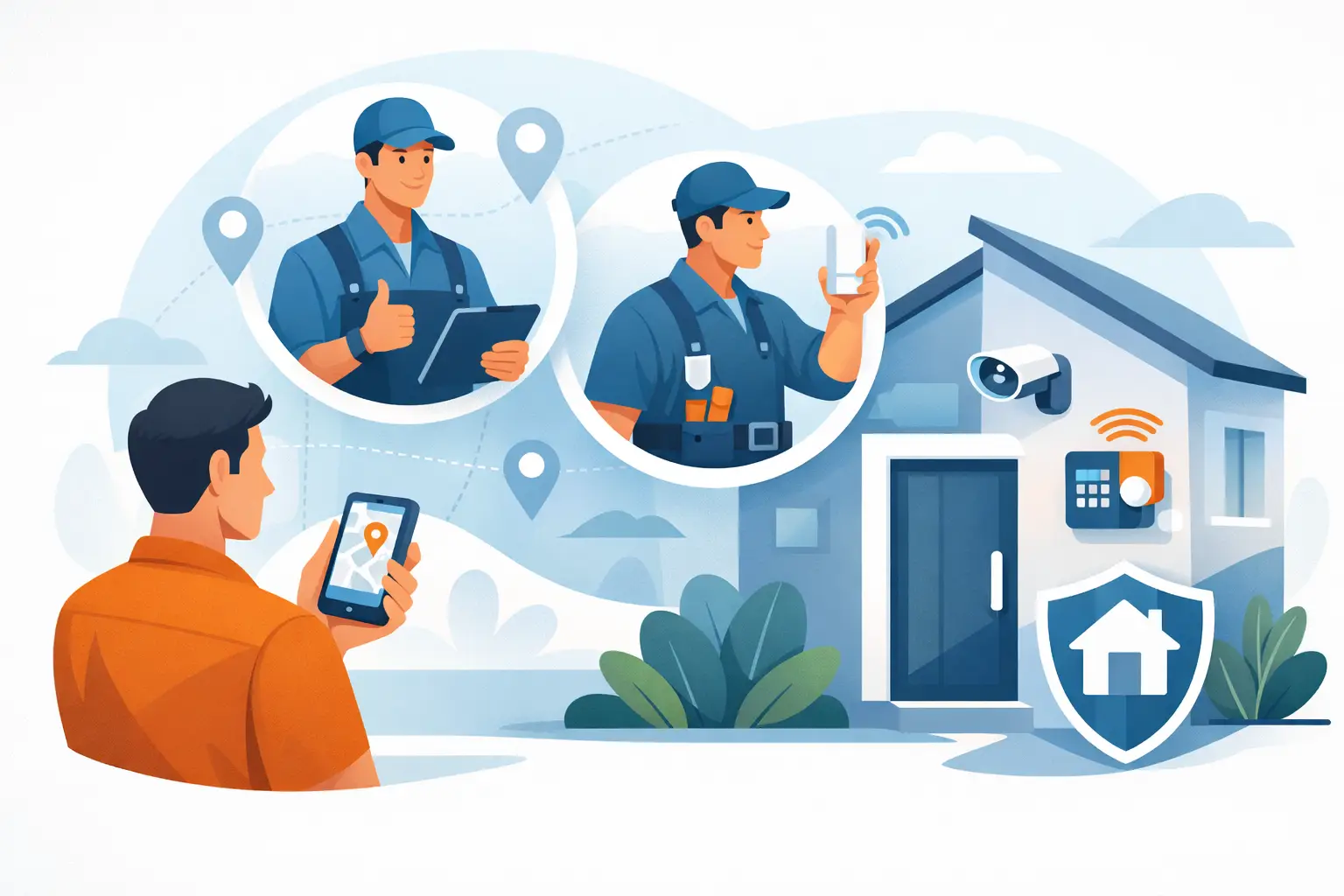
You usually start searching for wireless alarm installers near me after something has changed. Perhaps you have moved into a new house, taken over a shop unit, had a near miss with a break-in, or simply realised the old alarm is no longer doing the job. At that point, what matters is not just finding someone who can fit an alarm. It is finding an installer who can assess the property properly, recommend the right system, and still be available when you need servicing or support later on.
Wireless alarms are a strong option for many homes and business premises, but they are not all equal. The quality of the system matters, and so does the quality of the installation. A good installer will help you avoid common problems such as poor detector placement, weak signal coverage, awkward app setup, nuisance activations, or a system that looks fine on paper but does not suit the way the building is used day to day.
Why local wireless alarm installers near me are often the better choice
There is a reason many property owners prefer a nearby specialist rather than a distant national chain or an online-only seller. Security is not a boxed product. It works best when somebody sees the layout, understands the entry points, and asks the right questions about how the property is occupied.
For a homeowner, that might mean identifying vulnerable rear access, detached garages, patio doors, or blind spots around the side of the house. For a landlord, it may involve balancing reliable protection with straightforward operation for tenants. For a business, it could be about setting up staff access, securing stock areas, and making sure opening and closing routines are practical.
A local installer can usually survey the site more thoroughly and respond more quickly if there is a fault, a battery issue, or a need for future expansion. That matters more than many people realise. Security systems are rarely static. People add extensions, convert rooms, change locks, alter staffing, or decide they want CCTV and access control to work alongside the alarm.
What a proper wireless alarm survey should include
If your search for wireless alarm installers near me leads straight to a price without a survey, it is worth being cautious. A reliable quote should come after someone has taken the time to understand the property and your priorities.
A proper survey should look at the building layout, likely access routes, current physical security, and how the system will actually be used. In a home, that could include whether you want full setting at night, part setting while people are upstairs, pet-friendly detection, and app control for family members. In a business setting, it may involve staff access levels, out-of-hours notifications, insurance requirements, and whether there are areas that need separate protection.
This is also the stage where an experienced installer should explain whether wireless is the right choice at all. In many properties it is ideal, especially where you want less disruption during fitting or where wiring routes would be difficult or unattractive. In some larger or more complex premises, a hardwired or hybrid system may still make better sense. Honest advice matters here. The right answer is not always the quickest one.
Wireless alarms are convenient, but installation still matters
One of the biggest misunderstandings about wireless alarms is that they are simple because they do not need the same cabling as traditional systems. They can certainly reduce disruption, and they often suit occupied homes and finished commercial spaces well. That does not mean they are a DIY job in every case or that all installers will deliver the same result.
Detector positioning remains critical. Door contacts, motion sensors, external sounders, keypads, and control units all need to be located with care. Signal strength needs checking. Device pairing needs to be reliable. The installer should also think about how easy the system is to use once fitted. A system that is technically impressive but confusing to set and unset tends to cause problems later.
Battery management is another area where professional setup helps. Good systems give clear warnings and are designed for dependable performance, but the installer should make sure you understand maintenance intervals and what ongoing support is available. For landlords and businesses especially, that support can be just as important as the original fitting.
Questions worth asking before you book
Most customers do not want to become alarm experts, and they should not have to. Still, a few straightforward questions can tell you a lot about the installer you are dealing with.
Ask whether they carry out an on-site survey before recommending a system. Ask who will install it and whether they also service and repair systems after fitting. Ask what happens if you need an upgrade later or if a fault develops. If you are considering a smart setup, ask how app control works in practice and whether the installer will help with configuration and user guidance.
It is also sensible to ask whether the recommendation is tailored or based on a fixed package. Some properties do suit standard layouts, but many do not. A terraced house with rear alley access has different needs from a detached property with outbuildings. A small office with one entrance is different from a retail unit with staff access, storage space, and public-facing doors.
You are not just listening for the right answers. You are listening for a practical approach. A dependable installer will explain things clearly, avoid overselling, and be open about what will and will not benefit your property.
What separates a good installer from a cheap quote
Price matters, but security is one of those areas where the cheapest option can become expensive later. A low quote may leave out essential devices, ongoing support, proper commissioning, or a system that can be expanded as your needs change.
Good installers tend to focus on fit for purpose rather than headline price alone. That means thinking about everyday use, false alarm reduction, sensible entry and exit routes, and whether the system integrates well with other security measures. If you already have CCTV, door locks, or access control in place, the alarm should complement them rather than sit in isolation.
Aftercare is another major difference. Some companies are happy to fit a system and disappear. Others take a longer view and provide servicing, maintenance, fault diagnosis, and upgrades as the property changes. For many customers, that ongoing relationship is the real value. It means there is someone to call who already knows the site and the setup.
That service-led approach is one reason many customers across Bolton and the wider North West look for a specialist rather than a general tradesperson. Companies such as Enga Security Installations work on that basis – survey first, specify properly, install professionally, and remain available afterwards.
Choosing a system for home or business
Wireless alarm systems can work very well in both domestic and commercial settings, but the best specification depends on how the building is used.
For homes, ease of use is often the priority. People want a system they can set quickly, control from a phone if needed, and rely on when they are out, asleep, or away on holiday. The right setup may include perimeter protection on doors and windows, internal detection in key circulation areas, and night setting options that make sense for the household.
For landlords, durability and simplicity are important. The system needs to be secure, but also manageable between tenancies and straightforward for occupiers to understand. A well-chosen wireless system can help here, particularly where neat installation and minimal disruption are needed.
For businesses, the conversation is usually broader. Out-of-hours protection, staff access, insurance expectations, and integration with CCTV or door entry all start to matter. A small office may need a relatively simple arrangement, while a shop, workshop, or mixed-use premises might need zoning, separate user permissions, and more careful planning around operating hours.
The value of support after installation
An alarm is not only tested on the day it is fitted. It is tested months later when a battery warning appears, when you need to add a detector, when a member of staff changes, or when you want advice after altering the property.
That is why support should be part of your decision from the start. Ask whether maintenance is available. Ask whether the installer can work on existing systems if you are upgrading rather than starting from scratch. Ask how faults are handled and whether help is available if you are unsure how to use a feature.
These details can sound small at quotation stage, but they make a real difference over the life of the system. A professionally installed wireless alarm should give reassurance, not create another list of jobs to manage.
If you are comparing wireless alarm installers near me, look past the advert and look at the service behind it. The right installer will treat your property as an individual job, not a standard package, and give you advice that still makes sense a few years from now. That is usually the clearest sign you are dealing with somebody who takes security seriously.