

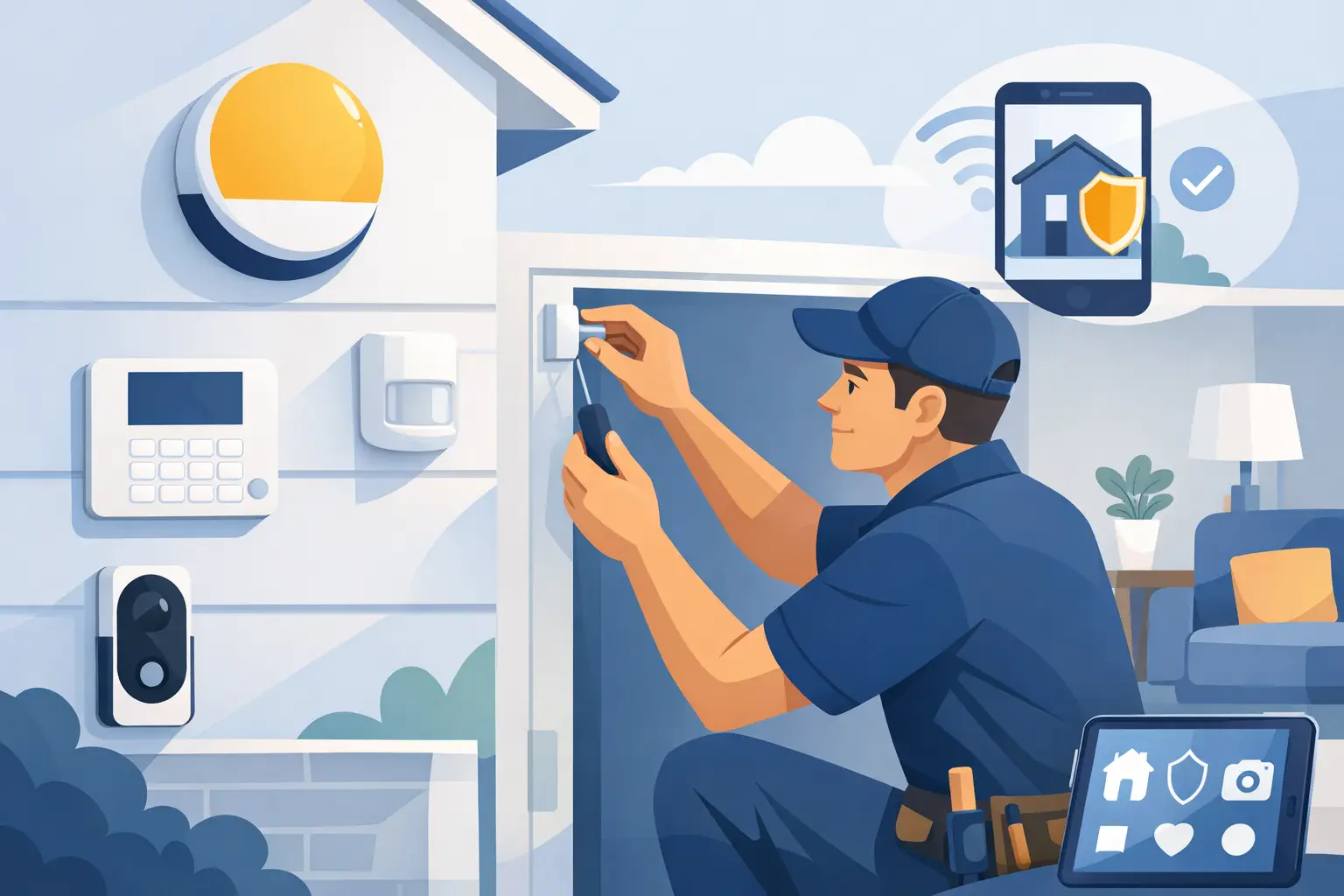
A smart alarm can look simple in the box, but getting reliable day-to-day protection depends on more than sticking sensors to walls and downloading an app. With Yale smart alarm installation, the real difference is in where devices are placed, how the system is set up, and whether it suits the way you actually use the property.
For homeowners, landlords and small businesses, that matters. An alarm that is awkward to arm, throws up false alerts or leaves weak spots around entry points quickly becomes a frustration rather than a safeguard. A professionally fitted Yale system is meant to do the opposite – give you clear control, dependable alerts and confidence that the system will work properly when needed.
What a Yale smart alarm installation should achieve
A good installation starts with the property, not the product. Every home and business has different access points, different routines and different risks. A ground floor flat, a family home with pets, a rental property and a small retail unit will not all need the same layout, even if they use the same Yale range.
That is why proper Yale smart alarm installation is about system design as much as fitting. The aim is to cover the most likely routes of entry, make arming and disarming straightforward, and avoid common causes of nuisance alerts. Door and window contact placement, PIR positioning, hub location and external siren siting all affect how well the system performs.
There is also the practical side. Smart alarms rely on stable communication between devices and the hub, and on a sensible app setup for the people using it. If signal strength is poor in part of the building, or if user permissions are not configured clearly, the system can feel unreliable even when the hardware itself is sound.
Why professional fitting makes a difference
Yale systems are designed to be user-friendly, but user-friendly does not always mean best installed without guidance. In many properties, the challenge is not the first sensor – it is getting the complete system balanced properly.
For example, PIR sensors need to be positioned to catch movement through a room without facing obvious heat sources or areas that could trigger unwanted activations. Door contacts need to be aligned correctly and fitted to sound surfaces. External sirens need to be visible enough to act as a deterrent, but also fixed securely and in the right place for the building.
Then there is the setup work people often underestimate. Linking devices, naming zones clearly in the app, setting entry and exit timings, creating part-set modes and checking notifications all take time. Done well, these details make the system easier to live with. Done badly, they lead to confusion, missed alerts or a setup that residents stop using consistently.
A professional installer will also spot where a Yale system should form part of a wider security approach. Some properties benefit from added CCTV, upgraded door locks or improved perimeter security. In other cases, a smart alarm on its own is enough. Honest advice matters here, because overselling is no use to anyone if the end result is a system that does not fit the site.
How the installation process usually works
The best results usually begin with a survey. That gives a chance to assess entry points, internal layout, likely sensor locations and any factors that might affect wireless performance. It also helps clarify how the property is used. A family home with school-run routines needs a slightly different setup from an office that opens and closes at fixed times.
Once the layout is agreed, installation is normally straightforward and far less disruptive than many people expect. Wireless Yale systems reduce the need for extensive cabling, which is especially useful in occupied homes, decorated interiors and smaller business premises where downtime needs to be kept to a minimum.
After the equipment is fitted, setup should include full pairing and configuration of the system, app connection, user setup and proper testing. Testing is not just a box-ticking exercise. Each sensor, siren, keypad and notification function should be checked so there is confidence that the system responds as intended.
Just as important is handover. A good installer will explain how to arm and disarm the system, how to use part-set modes, what the notifications mean and what to do if a device needs attention. That gives customers a system they can use comfortably from day one rather than one they have to work out for themselves later.
Common issues with DIY Yale smart alarm installation
Some DIY installations work perfectly well, particularly in very simple layouts. But where people tend to run into trouble is not with the basic idea of fitting a smart alarm – it is with the details.
Poor sensor placement is one of the biggest issues. A contact fitted to the wrong part of a frame, or a PIR pointed across a difficult area, can reduce effectiveness or create false alarms. Another common problem is assuming that one detector covers more than it really does. Gaps in coverage are easy to miss until they matter.
App setup can also be a sticking point. If user access is not set sensibly, or if alerts are not configured correctly, the system can become inconvenient. The same goes for entry and exit delays. Too short and people rush. Too long and security is compromised.
There is also the question of future support. If a device drops offline, batteries need replacing, or the system needs expanding later, some customers prefer knowing there is a local specialist who already understands the installation. That can save time and remove a lot of guesswork.
Choosing the right Yale setup for your property
Not every property needs every available device. In fact, keeping the system practical is often the better approach. A smaller home may only need well-placed door contacts, one or two PIRs, a hub, keypad and external siren. A larger house may need a more layered layout covering multiple entry routes, detached areas or vulnerable rear access points.
For landlords, ease of use and reliability are often the priorities. The system needs to be straightforward for tenants while still offering proper protection. In small business premises, control can be more important – who can arm the alarm, who receives notifications and how opening and closing routines are managed.
Pets, outbuildings, shared access and internet reliability can all influence the final recommendation. This is where a tailored approach matters. The right solution is rarely the biggest kit. It is the one that suits the site and the people using it.
Support after installation matters too
A smart alarm is not just a fit-and-forget purchase. Batteries need changing over time, settings may need adjusting and some customers want to add devices later. Others need help after changing mobile phones, broadband routers or household routines.
That is why aftercare is part of a proper service. Ongoing support helps keep the system useful rather than letting small issues turn into bigger ones. If the alarm needs servicing, fault-finding or an upgrade, having access to someone local who deals with these systems regularly is reassuring.
This is especially relevant for businesses and landlords, where an alarm problem can affect more than one person and needs resolving promptly. A long-term service relationship is often more valuable than the cheapest initial fitting.
Yale smart alarm installation for homes and businesses
The appeal of Yale smart alarm installation is clear. You get app-based control, alerts to your mobile phone and a system that can be adapted to suit modern properties. But the technology only earns its keep when the installation is thought through properly.
For homes, that means protection that fits everyday life without becoming a nuisance. For businesses, it means a setup that supports secure opening and closing, clear user access and dependable operation. In both cases, careful positioning, proper configuration and thorough testing make the difference between a system that simply exists and one that genuinely helps protect the property.
A local specialist such as Enga Security Installations can take the pressure out of that process by surveying the site, recommending a suitable layout, fitting the system correctly and supporting it afterwards. That is often the most sensible route for customers who want the convenience of smart security without the uncertainty that can come with trial and error.
If you are considering a Yale alarm, it is worth thinking beyond the kit itself. The best results come from a system that matches the building, the people using it and the level of support you want once it is in place.