

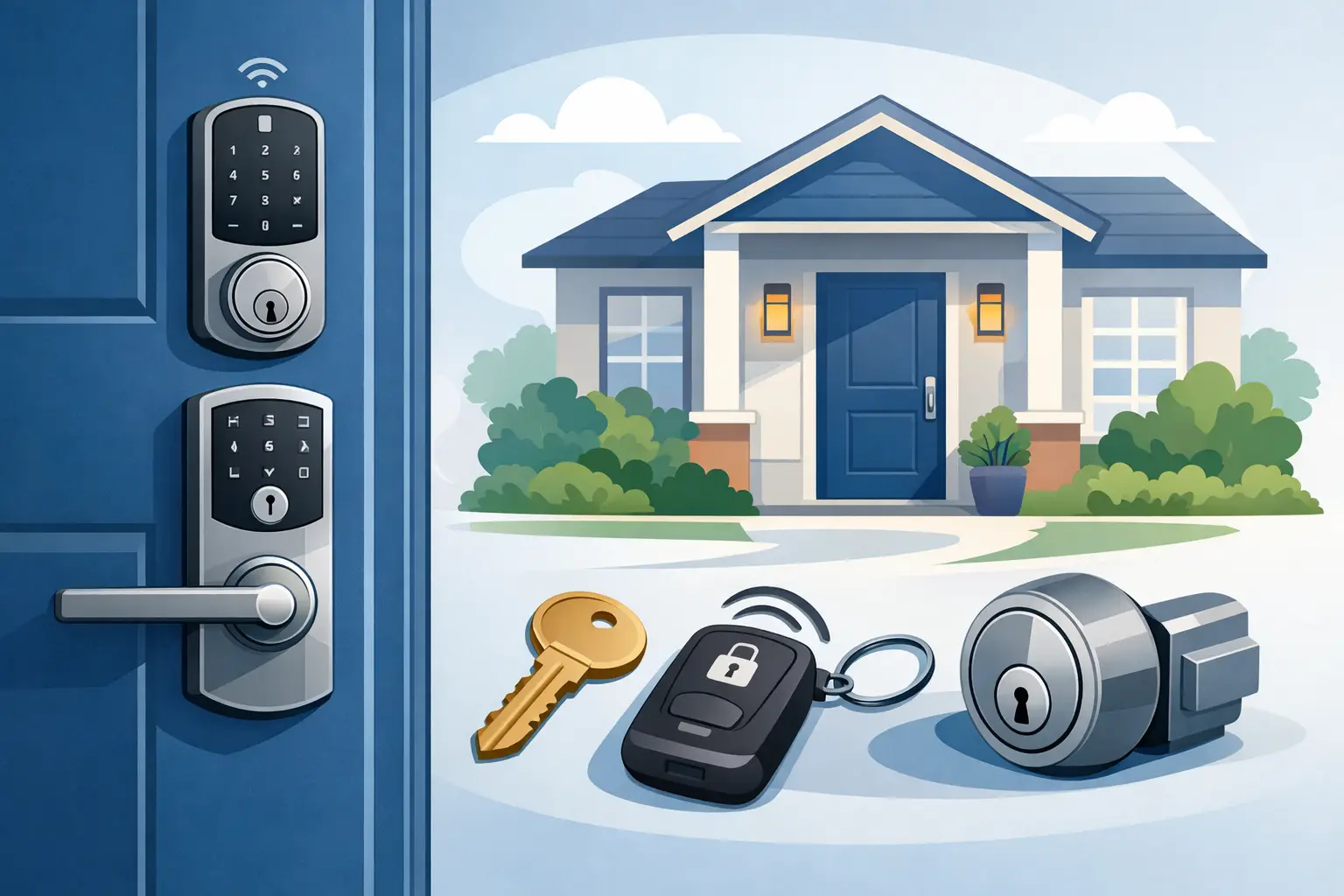
A front door usually only gets attention when something goes wrong – a stiff key, a loose handle, a failed mechanism or a break-in nearby that makes security feel suddenly urgent. When people ask about the best locks for front doors, the honest answer is that there is no single best option for every property. The right lock depends on the door itself, the frame, how the property is used and whether the existing hardware is fitted properly.
That matters because a good lock on the wrong door, or badly installed, can leave weak points that burglars know how to exploit. For homeowners, landlords and businesses, it is often better to think in terms of the best locking setup rather than the best individual product.
What makes the best locks for front doors?
The strongest front door security usually comes from a combination of factors rather than one impressive-looking lock. The door material matters. A solid timber door has different strengths and weaknesses from a uPVC or composite door, and the lock needs to suit that construction.
Standards matter too. In the UK, many people look for locks that meet recognised security standards and insurance requirements, but it is still important to check exactly what your insurer expects. A lock that sounds secure in general terms may not be the right specification for your policy or your style of door.
Then there is the practical side. A lock should be secure, but it also needs to work reliably in daily use. If a mechanism jams, drops out of alignment or becomes difficult to operate, people often stop using it as intended. Security suffers the moment convenience takes over.
Mortice sashlocks for timber front doors
For traditional timber front doors, a good mortice sashlock remains one of the most dependable options. This type of lock is fitted into a pocket cut into the edge of the door, which gives a neat finish and can offer strong resistance when installed correctly into a solid door and frame.
A 5-lever mortice sashlock is often the standard people mean when they talk about secure timber door locks. In many cases, it is a sensible choice because it provides better resistance than older or more basic lever locks. It also suits doors where you want a key-operated lock combined with a latch for everyday use.
That said, not every timber door is a candidate for simply swapping in a heavier mortice lock. The condition of the timber, the depth of the door, the strike plate and the frame all matter. On an older door, you can easily end up with a lock that is only as strong as the wood around it.
Euro cylinder locks on uPVC and composite doors
If your front door is uPVC or composite, there is a good chance it uses a multipoint locking system operated by a euro cylinder. In these setups, lifting the handle engages several locking points along the length of the door, and turning the key secures them in place.
This can be a very effective arrangement, but the cylinder is often the part that needs the closest attention. A poor-quality euro cylinder can be the weak point, even when the rest of the door looks substantial. This is why anti-snap, anti-pick and anti-drill cylinders are widely recommended for modern front doors.
In practical terms, cylinder snapping has been a known method of attack for years. If the cylinder protrudes too far or is not designed to resist snapping, forced entry can be surprisingly quick. Upgrading the cylinder is often one of the most worthwhile security improvements for a uPVC or composite front door, provided the door and mechanism are in sound condition.
Multipoint locks and where they fit in
When people compare the best locks for front doors, multipoint locking systems are often near the top of the conversation. That is for good reason. By securing the door at several points rather than one, they can improve resistance to forcing and help keep the door pulled tightly into the frame.
They are especially common on uPVC and composite doors, but not all multipoint systems are equal. The quality of the mechanism, the alignment of the keeps and the condition of the hinges all affect how well the system performs. If the handle feels heavy or the lock is difficult to engage, that can be a sign that the issue is not the cylinder alone but the whole mechanism.
This is where expert assessment helps. Replacing a cylinder without noticing a worn gearbox or badly aligned door may solve very little. A proper inspection can show whether the right answer is a cylinder upgrade, a mechanism repair or a full lock replacement.
Night latches and secondary security
Night latches still have a place on some front doors, particularly timber doors, but they are rarely the whole answer. A standard latch on its own does not provide the same level of security as a properly specified mortice lock or a suitable multipoint system.
Used as a secondary lock, though, a good night latch can add convenience and another layer of protection. For some households, especially where quick locking from inside matters, that can be useful. The main point is not to mistake convenience for full security.
If a front door currently relies on an older night latch and little else, that is usually worth reviewing. Many properties in the North West still have door security that has simply not kept up with current standards or current burglary methods.
Are smart locks the best choice?
Smart locks appeal for obvious reasons. Keyless entry, app control, user codes and remote management can be genuinely useful, especially for landlords, managed properties and small businesses. They can also be helpful in busy households where lost keys are a regular problem.
But smart does not automatically mean more secure. Some smart locks are excellent when correctly chosen and professionally installed. Others are better suited to convenience than serious front door security. Battery dependency, compatibility with the existing door, user habits and emergency override options all need proper thought.
For many properties, the best result is a smart locking solution that works alongside solid physical security rather than replacing it. A well-secured door with a suitable smart access system can be very effective, but only if the basics are right first.
The lock is only part of the job
One of the most common mistakes is focusing on the lock in isolation. A front door is a system. The cylinder, sashlock or multipoint mechanism may be sound, but if the frame is weak, the keeps are poorly fixed or the door is out of alignment, security is compromised.
This is particularly relevant after wear and tear, weather movement or repeated slamming. A door that drags or needs force to lock is not just an annoyance. It can lead to premature lock failure, incomplete engagement of locking points and extra strain on handles and gearboxes.
Professional fitting matters here because the standard of installation often decides whether a lock performs as it should. That is one reason many customers prefer a local specialist who can survey the door, recommend the right hardware and return if adjustments or maintenance are needed later.
Choosing the right front door lock for your property
For a timber front door, a quality mortice sashlock is often the sensible starting point, sometimes supported by a secondary lock depending on the property and usage. For a uPVC or composite front door, a well-maintained multipoint system with a high-security euro cylinder is usually the more appropriate answer.
If you manage rental property, ease of access control and durability may be just as important as the lock rating itself. If you run a shop or office, staff access and key control can become major considerations. And if your current front door is ageing or poorly aligned, replacement of the lock alone may not be the full fix.
That is why tailored advice tends to be more useful than generic product rankings. At ESI, this is usually where a site survey adds value – not by overcomplicating the choice, but by making sure the recommendation fits the door, the property and the level of risk.
When to upgrade sooner rather than later
If your key sticks, the handle feels loose, the lock only works with a bit of force or the cylinder sits proud of the handle, it is sensible to get it checked. The same applies if you have moved into a property and do not know who still has keys, or if the lock is simply old and below current expectations.
A front door lock does not need to fail completely before it becomes a problem. Many of the best upgrades are preventative. They are about reducing weak points before they turn into call-outs, lockouts or something more serious.
The best front door security is usually quiet and uneventful. It works properly every day, suits the property, and does not leave you wondering whether the door is really secure when you leave the house or lock up for the night. That peace of mind is often a better measure than any label on the box.