

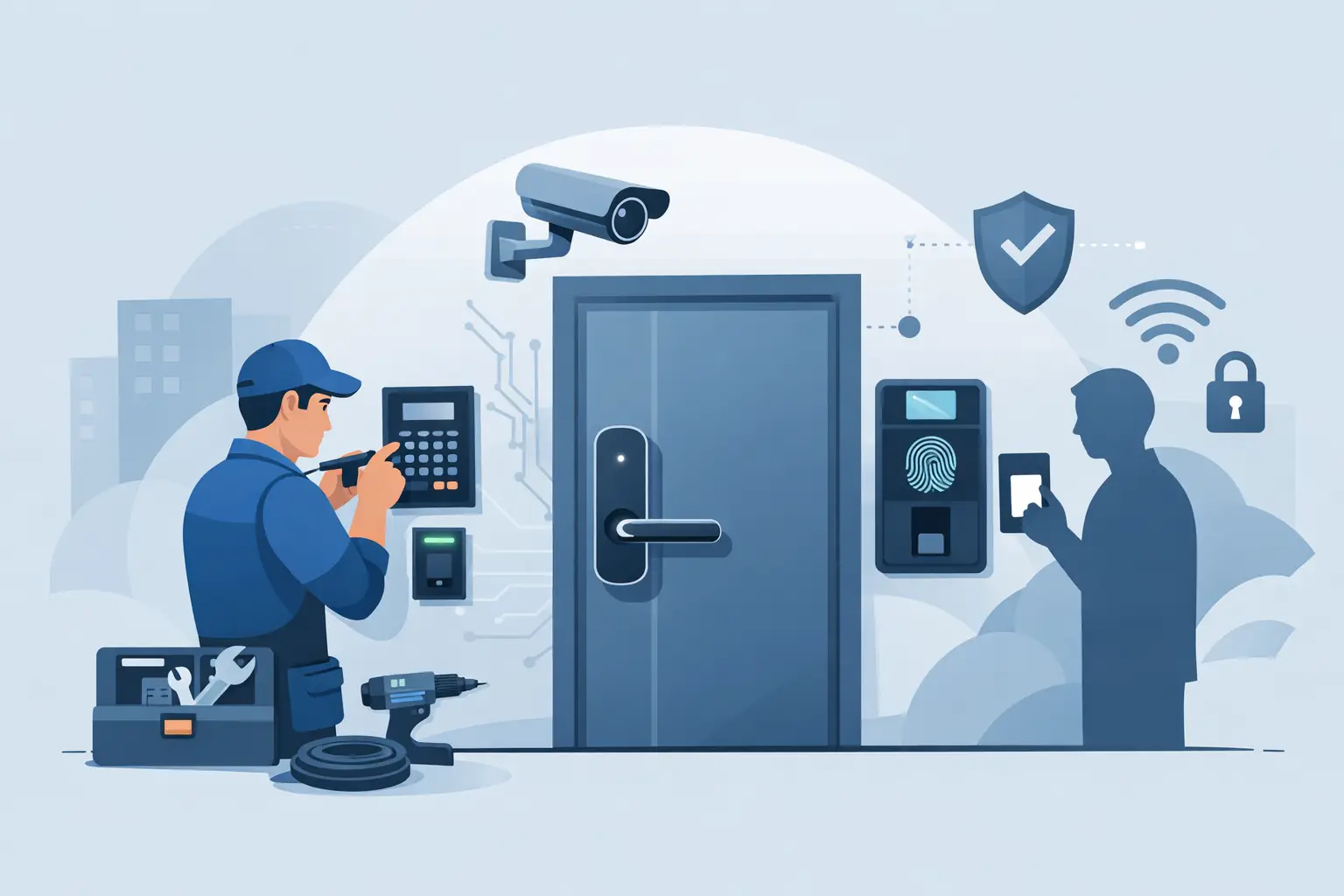
A front door that everyone can open is not much of a security measure. For many homes, rental properties and business premises, that is exactly the problem – too many keys in circulation, no clear record of who came and went, and too much reliance on trust alone. That is where access control system installation starts to make real sense. It gives you control over who can enter, when they can enter, and how that access is managed over time.
For some customers, the goal is simple. They want to stop lost keys becoming a security risk. For others, it is about separating staff areas from public areas, protecting stock rooms, or making shared buildings easier to manage. The right system depends on the building, the users, and the level of control you actually need rather than the most complex setup available.
What access control system installation actually involves
At its core, an access control system replaces or supports a traditional lock with managed entry. That might mean a keypad on a side gate, a fob reader on an office door, or a video entry system for a block entrance. Some systems are stand-alone and suit a single door. Others are networked across several entry points so permissions can be updated centrally.
A proper access control system installation is more than fitting a reader to a wall. The installer needs to look at the door itself, the lock type, the frame condition, cabling routes, power supply, fire safety requirements and how people move through the building. A strong reader on a weak or badly aligned door will never give the result people expect.
This is why a survey matters. It helps identify whether your property is best suited to a wired or wireless setup, whether your existing doors can be adapted, and whether you need simple coded access or something more controlled such as fobs, cards or app-based entry. Good advice at this stage usually saves money and disruption later.
Choosing the right type of access control
Not every site needs the same level of protection. In a small office, a single entry door with a keypad and release button may be enough. In a shared commercial premises, you may need multiple users, timed access and an audit trail. In a residential setting, convenience can matter just as much as security, especially where several family members or tenants need access without cutting more keys.
Keypads, fobs and card entry
Keypads are a straightforward choice where a limited number of trusted users need regular access. They work well, but codes can be shared, guessed or forgotten. That does not make them a poor option, but it does mean they need managing properly.
Fob and card systems offer more control. If a fob is lost, it can usually be removed from the system without changing the whole lock arrangement. That is a major benefit for landlords and businesses where users change over time. It is often more practical and more secure than trying to track physical keys.
Audio and video entry systems
Where you need to verify visitors before allowing access, audio or video entry is often the better fit. This is common in flats, offices and buildings with restricted rear or side entrances. A video element gives extra reassurance, but it also adds cost and requires the right positioning and connectivity to be useful.
Stand-alone or networked systems
A stand-alone system can be ideal for a single door where simplicity is the priority. Networked systems suit growing businesses or larger properties because permissions can be managed across several access points. The trade-off is that they need more planning and, in many cases, more ongoing administration.
Why professional installation matters
Access control is one of those systems that can look straightforward until the door does not release properly, the lock is not suitable, or the reader fails in bad weather. Professional installation reduces these risks because the system is built around the door, the users and the property rather than fitted as an afterthought.
A qualified installer will consider fail-safe and fail-secure locking, emergency egress, safe cable routing and the practical reality of daily use. That matters in both domestic and commercial settings. A badly specified system can create inconvenience at best and a safety issue at worst.
For businesses, there is another consideration: continuity. If a staff entrance fails, it is not just a security issue. It can disrupt opening times, deliveries and internal movement. For landlords, reliability matters because a temperamental entry system quickly turns into a tenant complaint. Getting the installation right from the start usually avoids that pattern.
Access control system installation for homes and landlords
In domestic properties, access control is often used at gates, side entrances, shared doors and outbuildings. Some homeowners choose it for convenience as much as security, especially if they want to avoid carrying multiple keys or need to manage access for family members, carers or tradespeople.
Landlords tend to have slightly different priorities. They often need a system that is easy to reset between tenancies and simple to manage without repeated lock changes. Fob or coded entry can be useful here, particularly in houses in multiple occupation, converted buildings or small private blocks. The best setup is usually one that keeps day-to-day management simple while still giving residents dependable access.
There is a balance to strike, though. A more advanced system with app control and remote management can be convenient, but only if it is suitable for the users. If tenants are likely to prefer something straightforward and reliable, a simpler setup may be the better long-term choice.
Access control system installation for businesses
For commercial premises, access control is often about structure as much as security. A shop may want to secure its staff-only areas. An office may need different access permissions for managers, staff and cleaners. A warehouse may need controlled entry at several points without slowing down daily operations.
This is where tailored design becomes important. Too little control leaves gaps. Too much complexity creates workarounds, and workarounds usually weaken security. Staff prop doors open, share codes, or avoid using the system properly if it feels awkward. The most effective systems are usually those that fit the routine of the building.
A business should also think beyond the initial installation. Will more users need to be added later? Might another door need to be brought into the system next year? Is there someone responsible for managing permissions? A system that works today but cannot adapt easily may not be the best value over time.
What to expect during installation
Most projects begin with a site survey and discussion about how the property is used. That allows the installer to recommend suitable hardware, confirm whether existing doors and frames are appropriate, and explain how users will gain entry.
From there, installation may involve fitting readers, electric locking, exit buttons, intercom equipment, power supplies and associated cabling. On some properties, surface-mounted equipment is the practical choice. On others, a neater concealed approach is possible. It depends on the building fabric, budget and how much disruption is acceptable.
Once fitted, the system should be tested properly. That includes user access, door release, emergency exit function and any remote or app-based features. Customers should also be shown how to use it confidently. There is little value in a well-installed system if the people relying on it are left guessing.
Maintenance, support and future changes
Access control is not a fit-and-forget system. Like any security equipment, it benefits from servicing, checks and occasional updates. Readers can wear, credentials can be lost, batteries may need attention on some systems, and user requirements can change.
Ongoing support is particularly important for commercial sites and managed properties. If a tenant changes, a member of staff leaves, or a door starts sticking, you want a straightforward fix rather than a drawn-out problem. This is one reason many customers prefer working with a local installer that can handle the survey, fitting and aftercare in one place.
For customers across Bolton and the North West, that practical approach is often what matters most. Enga Security Installations focuses on systems that suit the property properly and can be supported over the long term, rather than pushing a one-size-fits-all package.
When is access control worth it?
If you are managing multiple keys, dealing with shared entrances, or worrying about who still has access to your property, access control is usually worth considering. It can improve security, simplify management and reduce the hassle of changing locks every time circumstances change.
That said, the best result comes from choosing the right level of system for the building. Some properties need a simple, dependable door entry solution. Others benefit from broader control across several entrances. A good installer will tell you the difference and explain what is genuinely necessary.
The right system should make life easier as well as safer. If it does both, you will notice the value every day.