

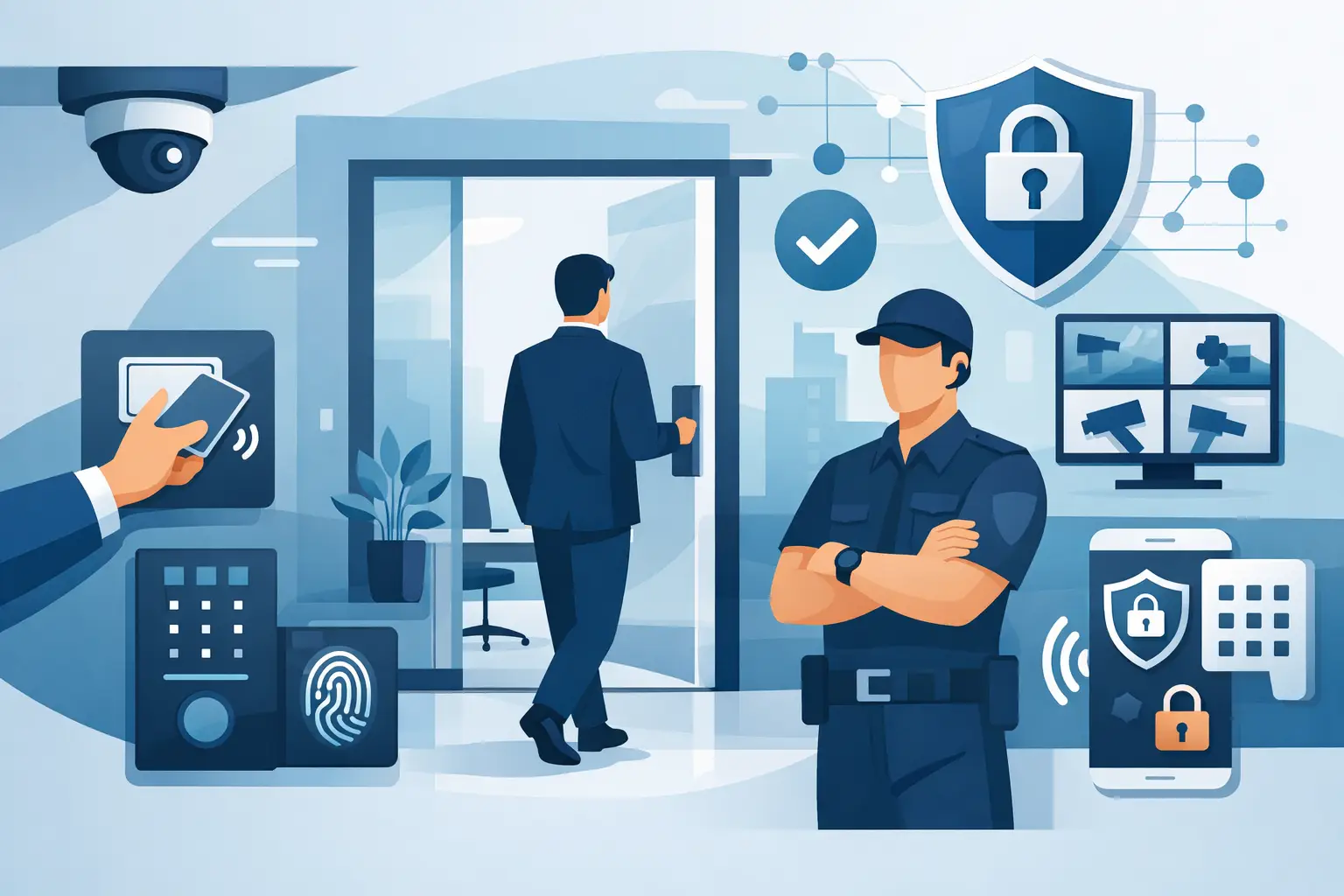
The weak point in many office security setups is not the alarm or the cameras. It is the front door at 8.55am, the side entrance used for deliveries, or the internal door that never quite shuts properly. If you are looking at how to secure office entry, the answer is rarely one product on its own. It usually comes down to getting the door, the hardware, the access permissions and the day-to-day habits working together.
For small and medium-sized businesses, that matters more than ever. Offices often have a steady flow of staff, visitors, contractors and parcel deliveries. The challenge is allowing the right people in without making entry so easy that it creates gaps in your security. A sensible setup protects people, equipment, stock and confidential information, while still keeping the building practical to use.
How to secure office entry starts with the door itself
Before looking at keypads, fobs or smart systems, start with the physical condition of the entrance. An access control system is only as good as the door and frame it is fitted to. If the door is warped, the frame is loose, or the lock is tired and misaligned, the most advanced electronic setup will still be compromised.
A proper survey should check the door material, the strength of the frame, the hinges, the closing action and the locking points. In some offices, a standard cylinder lock on a uPVC door may be enough with the right anti-snap protection and multipoint locking. In others, especially on busy commercial sites, a more secure digital lock or controlled access system will make better sense.
This is where a lot of businesses either overspend or underspecify. A small office with a handful of staff may not need a complex networked solution. On the other hand, if several people need access at different times, and keys have already gone missing once or twice, sticking with a traditional lock can become the more expensive option over time.
Decide who needs access and when
One of the most practical ways to improve entry security is to be clear about access levels. Many offices operate on assumption rather than policy. Staff use whichever door is nearest, old keys are still in circulation, and there is no clear record of who can enter outside working hours.
A better approach is to map access around the way the business actually runs. Consider who needs entry every day, who only needs occasional access, and which areas should stay restricted. Reception staff might need full front entrance control, while cleaning contractors may only need access during set hours. Directors may need early and late access, but that does not mean every employee should.
When you think about how to secure office entry, this is often the point where access control becomes more attractive than keys. Fobs, cards, PIN entry and app-based credentials make it easier to grant, adjust and remove access without changing locks every time staff roles change.
Choose the right entry method for the office
There is no single best system for every building. The right choice depends on the size of the office, the number of users, the type of door and how much control you want.
For a smaller office, a standalone keypad or digital lock may be enough. It removes the need for multiple keys and can be straightforward to manage. The trade-off is that PIN codes can be shared, especially if teams are not disciplined about changing them.
Fob or card access gives more accountability. Each user has their own credential, which can be cancelled if lost or when someone leaves the business. That tends to suit offices where staff numbers change, or where you want a clearer audit trail.
For some premises, especially those with higher-value equipment or sensitive records, a more integrated access control setup is the better fit. This can link doors, user permissions, time schedules and sometimes CCTV, giving you a much clearer picture of who entered and when.
The important thing is not choosing the fanciest option. It is choosing a system that staff will use properly and that suits the risks at the property.
Don’t ignore the entry points that feel secondary
Most businesses focus on the main front entrance, but side doors, rear exits and shared access points are often more vulnerable. A delivery entrance that is propped open during the day can undo the investment made in a secure front door. The same applies to internal access from shared corridors in office blocks.
Every door that leads into the office should be assessed in context. Fire exits need to remain compliant and safe, but they should still be protected against misuse. Rear doors may need better locks, door closers or monitored access. Shared entrance areas may benefit from a secondary controlled door so that gaining access to the building does not automatically mean access to your business.
This is one reason a tailored survey matters. Offices are rarely identical, and the right security arrangement depends on layout, footfall and how the building is used in practice.
Add CCTV where it supports entry control
CCTV is not a substitute for secure entry, but it does make your overall setup stronger. A well-positioned camera at the entrance helps verify who is arriving, supports investigations if there is an incident, and often acts as a visible deterrent.
For offices with reception staff, a camera linked to the main entrance can help with visitor management. For offices without a permanent front desk, remote viewing can provide reassurance out of hours and allow quicker checks if an alarm is triggered.
Placement matters here. A camera should give a usable view of the doorway and approach route, not just a wide shot of the car park. Image quality, lighting and recording coverage all need thought. There is little value in having footage that does not clearly show faces or activity at the point of entry.
Entry security also depends on staff behaviour
Even the best-fitted system can be weakened by routine habits. Doors get wedged open for convenience. Staff let unknown visitors follow them inside. Former employees keep old access cards in a drawer because nobody asked for them back.
This is why office entry security should include simple procedures, not just hardware. Staff should know which doors to use, how visitors are expected to sign in, and what to do if they see someone in the building who should not be there. Access credentials should be issued properly and removed promptly when people leave.
The aim is not to create a heavy-handed environment. It is to make secure behaviour the normal behaviour. In most offices, that means clear rules, simple systems and equipment that works reliably every day.
Maintenance is where many systems start to fail
A door entry system can perform well when it is first installed and gradually become less effective if it is not maintained. Locks wear, closers go out of adjustment, readers get damaged, and users develop workarounds when a door becomes awkward to use.
Regular servicing helps catch these issues early. It also gives you the chance to review whether the system still matches the business. An office that has grown from five staff to twenty may need a different setup than it did two years ago. A business that now has more flexible working may need better control over out-of-hours access.
This longer-term view is often where professional support makes the biggest difference. Installation is only part of the job. Ongoing maintenance and sensible upgrades keep the entry point secure as the office changes.
When to move beyond a basic lock and key
For some small offices, a high-quality lock, a secure frame and clear key control will be enough. But there are signs that it may be time to upgrade. Lost keys, staff turnover, frequent visitor traffic, out-of-hours access and concerns about internal accountability all point towards access control being worth considering.
The same applies if the office stores expensive equipment, handles confidential information or sits in a building with multiple occupiers. In those cases, being able to manage and track access more precisely is often a practical requirement rather than an optional extra.
A professional installer can help you weigh up the options properly. That could mean improving the physical door security first, fitting digital locks, adding controlled access, or combining entry security with CCTV and alarm coverage. The right answer depends on the site, the risks and the way your business operates.
If you want office entry to be genuinely secure, think beyond the lock on the door. A strong setup is one that suits the building, supports the way your staff work and can still be relied on six months from now, not just on installation day.