

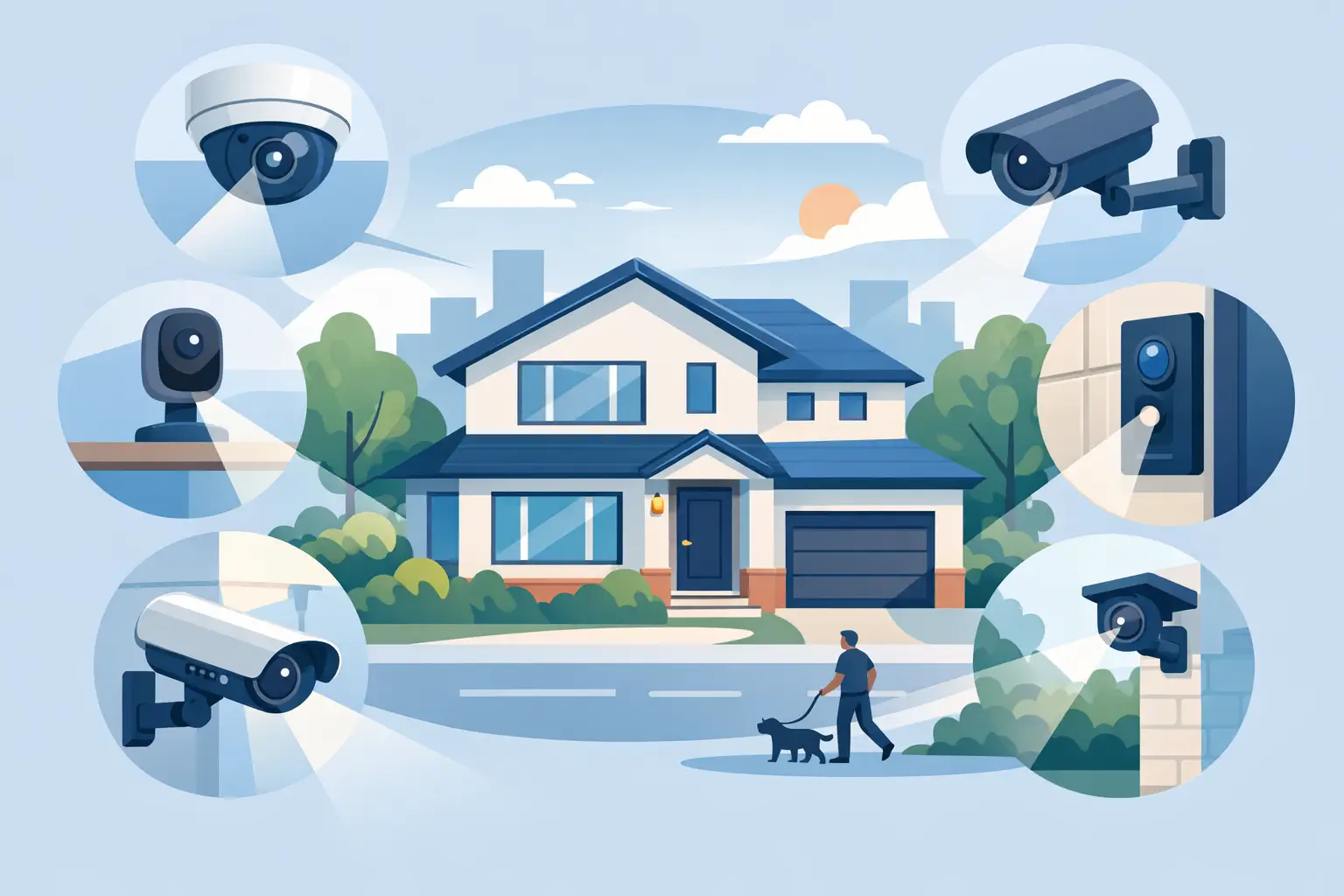
A camera can be excellent on paper and still do very little if it is fitted in the wrong place. When people ask about the best CCTV camera positions, they are usually trying to solve a practical problem: stop blind spots, capture clear footage, and make sure the system actually helps if something goes wrong.
That is why placement matters more than many people expect. A poorly aimed camera might record plenty of movement but miss faces, number plates or the point of entry. A well-positioned system, on the other hand, gives you useful coverage without turning the outside of your property into a forest of cameras.
Why the best CCTV camera positions are not the same for every property
There is no single layout that suits every house, shop or office. A detached home with a side gate needs a different approach from a terraced property facing directly onto a pavement. A small business with a rear delivery entrance will have different risks again.
The right positions depend on how people approach the property, where they could gain access, and which areas matter most if there is a dispute, break-in or act of vandalism. Height matters, lighting matters, and so does the camera’s field of view. One wide-angle camera can cover a broad area, but if it is too far from the action, the image may not be detailed enough to identify anyone properly.
Front door and main entrance
For most properties, the front door is one of the best CCTV camera positions because it captures the most common approach route. It also records callers, deliveries and anyone lingering near the entrance. For businesses, the same principle applies to the main customer entrance or office doorway.
The key is to avoid placing the camera so high that you only see the tops of heads. A camera fitted around first-floor soffit height can work very well, but it needs the correct angle. Too steep, and you lose facial detail. Too low, and it can be easier to tamper with. In many cases, the best result comes from mounting it high enough to deter interference, while still keeping a clear line of sight to faces at the door.
Doorbell cameras can help at the entrance, but they are not always enough on their own. They often focus tightly on the doorstep, which leaves less coverage of the wider approach.
Driveway, garage and vehicle access points
If you have off-road parking, the driveway is another priority area. Vehicles are valuable, and driveways often lead directly to the front door, garage or side access. A camera here can help record arrivals and departures, suspicious movement at night, and damage to parked vehicles.
This position works best when it covers more than just the car itself. Ideally, it should also capture the route in and out. If a gate, garage door or boundary line forms a natural choke point, that is often a strong place to focus on. For commercial premises, the same thinking applies to staff parking, yard entrances and loading areas.
Number plate capture is a common request, but it depends on distance, lighting and camera specification. If that level of detail matters, the camera needs to be chosen and positioned for it rather than expected as a bonus from a general overview camera.
Back door and rear access
Rear access is often quieter, less visible from the road and more attractive to intruders. That makes the back door one of the most overlooked but most effective CCTV positions. Many break-ins happen where there is more privacy and less chance of being seen by neighbours or passers-by.
A rear camera should cover doors, patio access, French doors or any route from the garden into the property. It is also worth thinking about lighting. Rear gardens can be much darker than the front, and strong backlighting from security lights or windows can affect image quality if the camera is not set correctly.
For businesses, rear exits, bin stores and staff-only doors often deserve the same attention. These areas are useful for access control, but they are also where blind spots can build up if the layout has grown over time.
Side paths, gates and narrow access routes
A side passage can be one of the strongest places for a camera because it forces movement through a narrow space. That makes it easier to record clear footage of anyone passing through. If your property has a side gate leading to the rear, this can be one of the best CCTV camera positions available.
Narrow access routes also reduce the amount of wasted footage. Instead of trying to monitor a whole garden or frontage with a single view, you can focus on the path someone is most likely to use. For landlords, this can be especially useful in shared access areas, provided the system is set up sensibly and with privacy in mind.
The main thing to avoid is aiming a camera where branches, fences or guttering constantly obstruct the picture. Even a good location can become frustrating if the image is regularly blocked.
Ground-floor windows and vulnerable blind spots
Not every useful camera position is about a door. Ground-floor windows hidden by fences, hedges or side returns can be vulnerable points, especially on corner plots or at the rear of a building. If there is a window that cannot easily be seen from the street but would give quick access inside, it may deserve coverage.
This does not always mean adding another camera directly above each window. Sometimes one well-placed unit can cover multiple weak points at once. The aim is to identify likely approach routes and exposed areas, not to blanket every wall for the sake of it.
A proper survey usually highlights these blind spots quickly. People often know the obvious entry points but overlook the areas a determined intruder would prefer because they are out of sight.
Reception areas, shop floors and internal entrances
External coverage is usually the first priority, but internal cameras can be just as important for some properties. In a business setting, reception desks, tills, stock areas and internal entry points can all be sensible locations. For landlords, communal entrances and shared halls may also be relevant.
Inside the property, cameras are often about evidence and accountability as much as deterrence. They can help confirm who entered, when they entered, and what happened next. That said, internal positioning needs care. It should support security without being excessive or intrusive, especially in workplaces where staff privacy must be considered properly.
Height, angle and lighting make the difference
Even the best position can fail if the camera is set at the wrong height or pointing into poor light. This is where professional fitting earns its keep. A camera that faces directly into bright sunlight, headlights or reflective surfaces may produce far less useful footage than expected.
As a general rule, cameras should be high enough to reduce the chance of tampering, but low enough to capture recognisable detail. The exact height varies depending on the area and the lens. There is always a balance between broad coverage and clear identification.
Night-time performance matters too. Infrared can help, but it is not magic. If the camera is pointed at shiny surfaces, close walls or overhanging foliage, night images can wash out or flare. Good placement takes these real-world issues into account before the first hole is drilled.
Common mistakes people make with CCTV placement
One of the biggest mistakes is relying on a single camera to do everything. Another is placing cameras only where they look neat, rather than where they actually provide evidence. It is also common to cover the front of a property well but leave the side and rear exposed.
Some people fit cameras too high and end up with overview footage that is useful for showing movement but not for identifying a person. Others place them too low, where they can be knocked, sprayed or redirected. There is also the issue of legal and privacy considerations. A system should protect your property without creating unnecessary problems by overlooking areas it does not need to record.
A smarter approach than simply adding more cameras
More cameras do not always mean better security. In many cases, fewer cameras in the right places give a stronger result than a larger system fitted without a clear plan. What matters is coverage of the areas that actually affect risk: entry points, access routes, assets, and the places where evidence would matter most.
For homeowners, that often means the front door, driveway, rear access and any side gate or hidden window. For businesses, it may include customer entrances, rear service doors, parking areas, cash points and stock movement routes. The layout should reflect the property, not a one-size-fits-all package.
A well-designed CCTV system should feel proportionate. It should deter, record and reassure without adding clutter or false confidence. If you are weighing up the best CCTV camera positions for your property, the most useful starting point is to look at how someone would approach, where they would avoid being seen, and what you would need the footage to prove later. That usually tells you more than the camera brochure ever will.